
Family & company
“They joined us, they drove us on, but they also divided us.”
So Helmut Weiste begins his book – about the inventions, first his father's, later his own. The story of ACCORD cannot be separated from the story of a family: of pride, quarrel, loss and reconciliation.
Heinrich Weiste, the founder
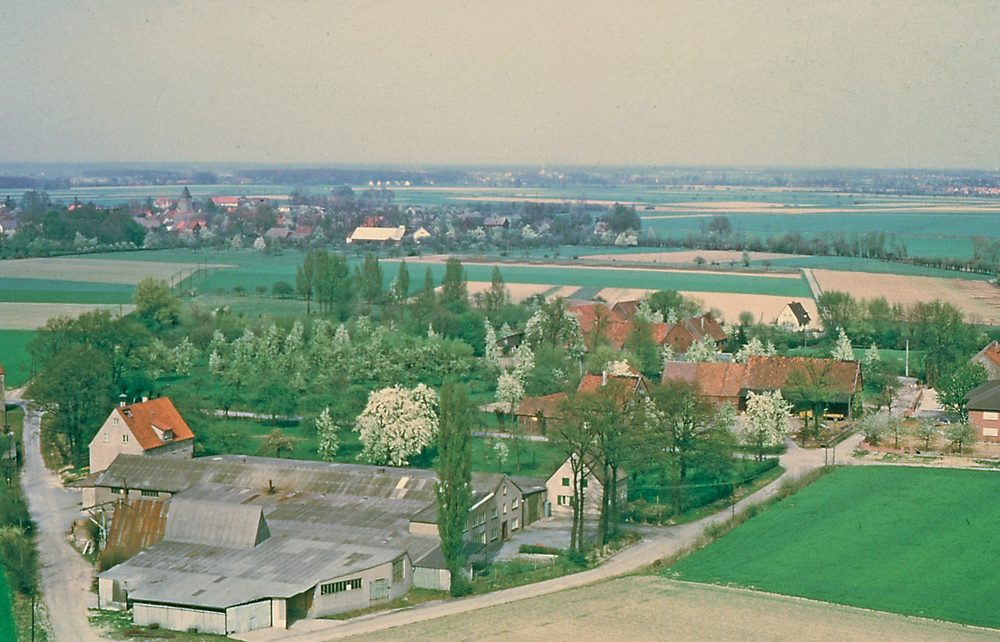
A farmer in Sieningsen, a village of six farms in the Soester Börde. Before the war he planted cabbage by hand for days on end; in the evening his back hurt. “I would rather have had it more comfortable,” he said later, with a smile. Out of that sentence came first wooden models, then – after his return from captivity – the first workable planting machine in Germany, built in the former cattle shed.
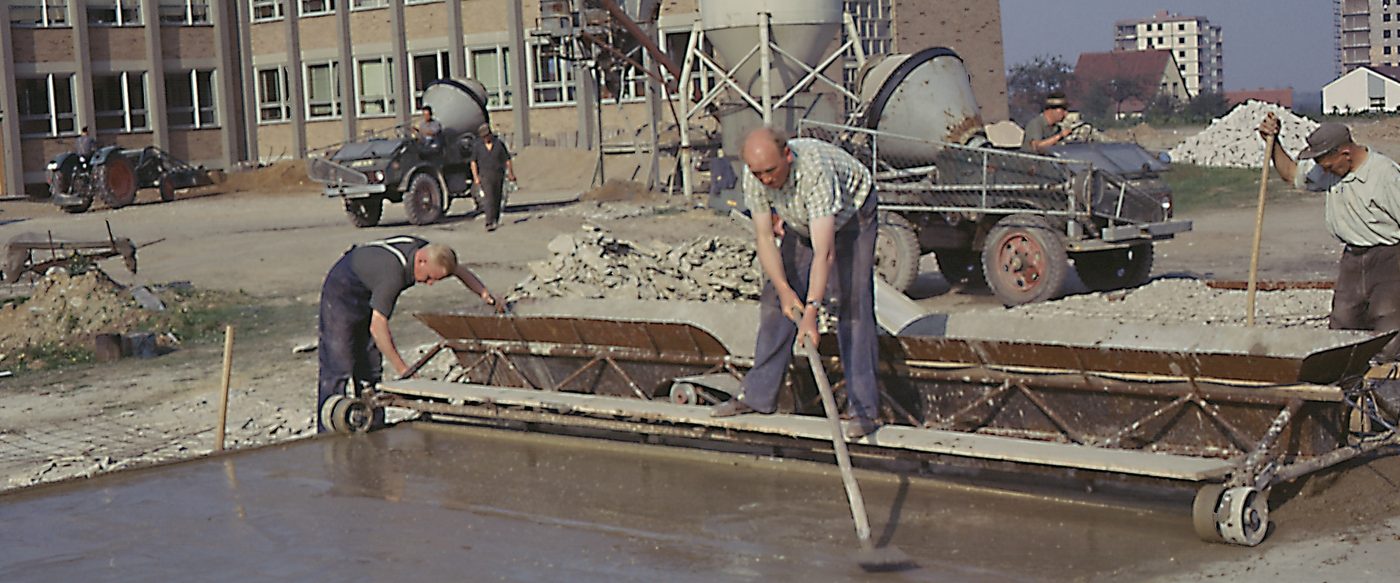
In 1948 he founded Heinrich Weiste & Co GmbH. He built the works himself, casting hollow blocks from chippings, cement and ash fetched free from the spoil heaps of the Ruhr, and put up two houses for employees. He was a man of large visions: when his son suggested in 1965 conveying the grains with air, he had a whole system of applications in his head within weeks and filed three patents in 1966 – before a single implement had been built.
That very strength became the problem. He staked everything on machines ten and twelve metres wide for large farms, while in West Germany 7,475 of the 7,841 drills sold in 1981 were narrower than three metres. Prototypes went into production without thorough testing. In 1974 the company had to file for a composition with creditors; in 1976 the bank realised the farm at Sieningsen. “For him the inheritance of his forebears was lost,” his son writes. “But he had put it at stake himself.”
Heinrich Weiste died in the night of 15 July 1981 – on the morning of the day on which the negotiation took place that saved the company financially.
Marie Weiste
Née Trelle, co-founder of the firm. In the early years she kept the books and did the payroll, until the workload grew too great and a commercial director was engaged. She bought the tinned food for the eight-week journey to Moscow in 1966. Her farm at Elfsen was mortgaged for the company, like her husband's; parts of it were seized and sold. In 1998, at the fiftieth anniversary, she sat as guest of honour in Soest town hall.
Helmut Weiste
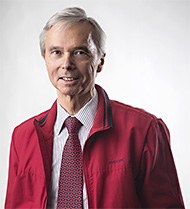
Born on 9 June 1945 at Bad Sassendorf. He grew up with three sisters, taught farming by a grandfather who insisted on order: after work, shares, shovels and hoes had to be cleaned and greased. At ten he drove the little Deutz, at fifteen the Unimog through the orchard.
He left grammar school with the intermediate certificate, trained as a machine fitter, invented the triangle coupling at seventeen, studied in Cologne from 1965 and graduated top of his year in 1968. After the complaints he joined the company in 1968, left in anger in 1969 for a second degree at Pforzheim, and returned in 1971. He became managing director in 1973 and left in 1999.
What defined him as a designer, he described himself:
Find a solution that is good and simple and manages with few elements. That is an advantage for production, for cost and for the customer. Helmut Weiste on his philosophy of design
And what sustained him: running once or twice a week against the back pain of a curved spine, the men's fitness group at the Bad Sassendorf sports club, mountain tours in the Austrian Alps. “The physical effort and the concentration on one thing brought relaxation and new strength. And there was the quiet and the remoteness up in the mountains – and a whole week without a telephone.”
The father-and-son conflict
It begins with a signature. On 29 February 1964 Heinrich Weiste concluded an agreement with his seventeen-year-old son that assured him the exploitation rights and 51 per cent of the licence income from the coupling triangle. A few days later the patent was filed in his name – on the patent engineer's advice, because the son was a minor. The father had himself entered as co-inventor.
With the pneumatic distribution, his son was not even named as a co-inventor.
Eight years later, in January 1972, the father dissolved the agreement in writing:
Helmut Weiste is the sole inventor of the quick-hitch triangle, German patent no. 1 215 419. The agreement of 29 February 1964 asserts property rights that do not exist at all. It is hereby dissolved.Heinrich Weiste, January 1972
“But the trust remained broken,” Helmut Weiste writes. The conflict accompanied them both through the 1970s: letters to Des Moines in which the father reproached his son over the running of the company; recommendations to John Deere that cut across his own firm's interests; a management meeting in 1972 at which no reasoned discussion took place, because the majority shareholder would not “be told anything by anyone”.
What the son owes his father
“But the good memory should remain as well: to my father and his planting machine I owe the courageous approach to developing new solutions, and with it the foundation stone of our family business.”
That Helmut Weiste sets this conflict down openly in his book is unusual for a company history. In his foreword, Bernard Krone called it “a justified warning for the many families in the farm machinery business”.
Bärbel Weiste
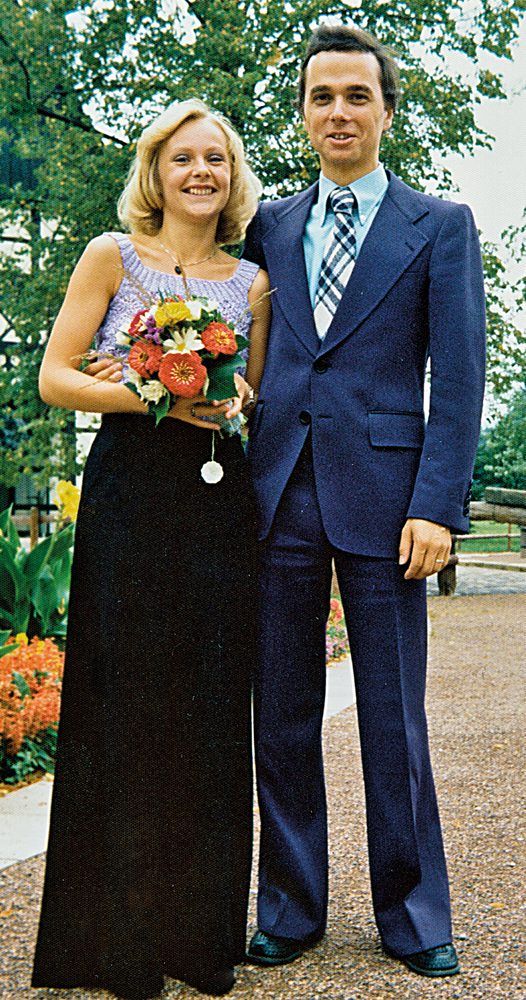
She was training as a teacher at the College of Education in Münster when she met Helmut Weiste – in the hardest months of the company's history. “With her cheerfulness she was, in that difficult time, the proverbial balm for my soul,” he writes. And: “Bärbel helped me to take heart and go on fighting for the survival of the firm.”
The proposal came on New Year's Day 1975 at St Peter-Ording, the wedding on 15 August – the groom arrived ten minutes late because a meeting overran and the bouquet still had to be collected. Their daughter Mira was born in 1977, their son Arno in 1978, a day after the DLG show.
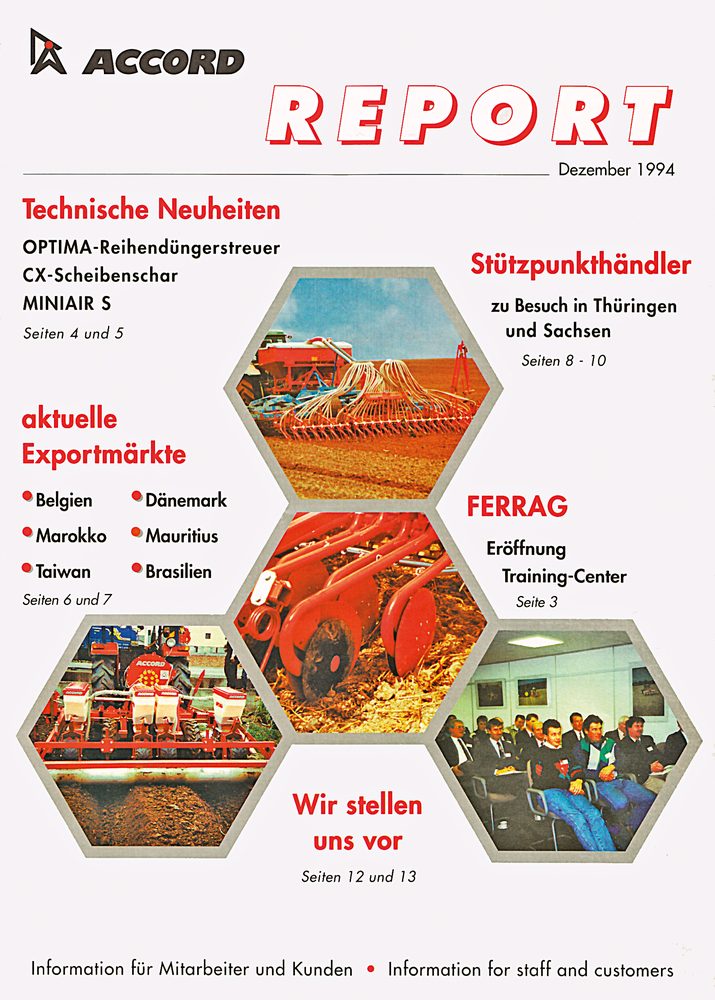
Her second career began on an Apple Macintosh. The company had bought a desktop publishing system for its spare parts catalogues; Bärbel Weiste learned it, developed technical graphics for training and brochures, and in December 1991 produced the first issue of the staff magazine – eight pages, black and white. In 1994 it became the bilingual ACCORD REPORT. She designed the fiftieth-anniversary brochure in four languages. And she did the typesetting and layout of the book this website is based on.
Only through her committed work in digitising and processing the many pictures were we able to put together this technically and historically unique documentation. Helmut Weiste in the closing words of his book
Mira and Arno
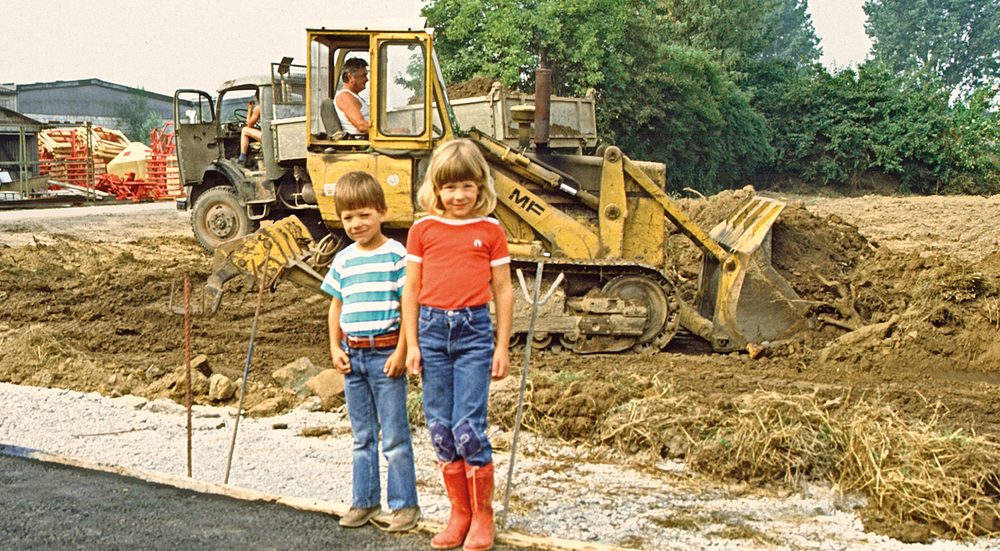
They appear in the book in two places. In 1983, aged five and six, they liked to accompany their father to the building site of the newly acquired neighbouring plot – 4,000 square metres of rubble were stored there, and the spoil heap was an adventure.
And in 1998, at the fiftieth anniversary in Soest town hall: the programme was presented by Arno Weiste, who in his free time hosted shows on the local station Hellweg Radio – and who, as his father writes, “was more interested in the new media than in farm machinery”. He interviewed three customers from three eras, among them Hedwig Mertens from Bettinghausen:
In 1954 my husband bought a planting machine in Sieningsen for our eight-hectare farm. It still had a little bell on it that gave the rhythm for laying in the plants. Hedwig Mertens, 1998
The company

| Year | What happened |
|---|---|
| 1948 | Heinrich Weiste & Co GmbH founded at Sieningsen |
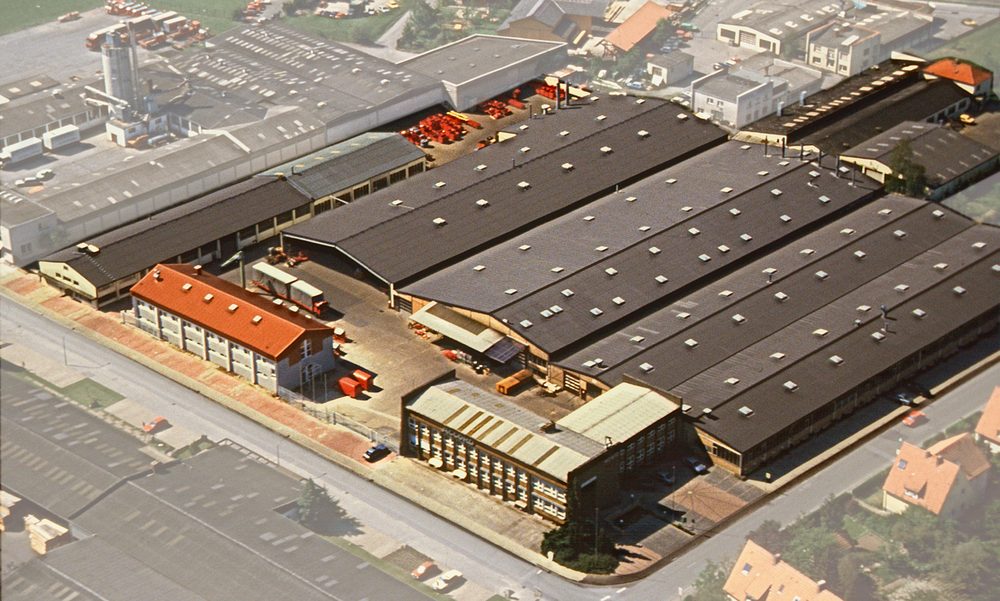
| 1961 | Move to Soest, south-eastern industrial estate |
| 1970 | 105 employees, 7.2 million marks turnover – profit only from the old products |
| 1973 | Walter Born and Helmut Weiste become managing directors |
| 1974 | Composition with creditors; 40 per cent in six instalments |
| 1976 | Composition fulfilled. Heinrich Weiste transfers his shares to his four children |
| 1977 | Renamed ACCORD Landmaschinen Heinrich Weiste & Co. GmbH |
| 1981 | Sale and lease back: the works are sold and leased back |
| 1983 | The younger sisters sell their shares; Walter Born becomes a shareholder |
| 1985 | Stake in Fähse, Düren |
| 1989 | Takeover of Fähse and of Lippetaler Kunststoff-Technik |
| 1992 | 49 per cent of the British importer Ferrag |
| 1994 | Distribution and cooperation agreement with Kverneland ASA |
| 1996 | Kverneland acquires ACCORD outright |
| 1999 | Helmut Weiste leaves the management |
| 2000 | Takeover of the precision seeding business of Kleine |
| 2008 | 74 million euros turnover; production in Soest reaches its limit |
| 2011/12 | The largest expansion in the company's history: over 10 million euros |
Fellow travellers
Helmut Weiste names a striking number of people in his book – even where other company histories would write “the company”. A selection:
Ernst Ullmann
A fitter at Weiste, trained as a coppersmith in Bohemia. In 1965 he hammered the first corrugated tube and brought in the stroboscope lamp that made two-phase flow visible. In 1963 he began injection-moulding plastics in his garage at Oestinghausen and built a company out of it. He died in 1985.
Walter Born
Engaged in 1969 as head of purchasing, managing director from 1973 and shareholder from 1983; responsible for administration, finance and sales. He took out the business-interruption insurance that covered every cost after the fire of 1985. He founded the company choir.
Norbert Kleine
In sales promotion from 1962. He demonstrated machines in Ireland in 1963 with the seventeen-year-old Helmut Weiste and led the eight-week journey to Moscow and across the Balkans in 1966 – with a freshly operated foot resting on the bench seat.
Gerd Stüttgen
From November 1975 “my right hand” on the DL. He had the decisive idea for the CX coulter and designed the frame of the OPTIMA-L for the Ukrainian market in a single week.
Ferdinand Schumacher, senior and junior
The father came from IHC Neuss, designed the Unimog concrete mixers and, as a hobby electronics enthusiast, built the first electronic tramline control in 1980. The son introduced 3D CAD and designed the slim version of the CX coulter in a matter of hours.
George Randles
He started in 1976 as a demonstrator for the British importer, became managing director and made Britain the largest market – a 46 per cent share. His motto: listen to the customer. The working relationship turned into a friendship.
Peter Penner
An agricultural engineer from Orenburg who moved to Soest with his family at the end of 1989. From 1992 he opened up the markets in Ukraine, Russia and Kazakhstan – travelling close to 200 days a year in the early years.
Karl-Ulrich Korn
Engaged in 1984 as a service engineer, he built up the first service department. In Scotland he worked out why a spreader's computer kept crashing on the same hilltop: a 200,000-volt overhead line, six metres above the ground.
Dr Till Meinel
He came from the Technical University of Dresden in 1991, initially as technical author. From 2000 he succeeded Helmut Weiste as head of research and development in Soest.
And the workforce
Every thousandth machine was celebrated. In 1985, despite the fire, two thousand drills were assembled. In the recession of the early 1990s the workforce had to be cut from 300 to 240 – “on a scale that had never happened before”.
My thanks go to the ACCORD employees who accompanied me through all the highs and lows and contributed so much to the success of the ACCORD PNEUMATIC system.Helmut Weiste, closing words