The machines
From a cattle shed to a full-liner
Six decades separate the first steel planting machine from the twelve-metre wide-area seed drill. A walk through the range – and through the logic behind it.
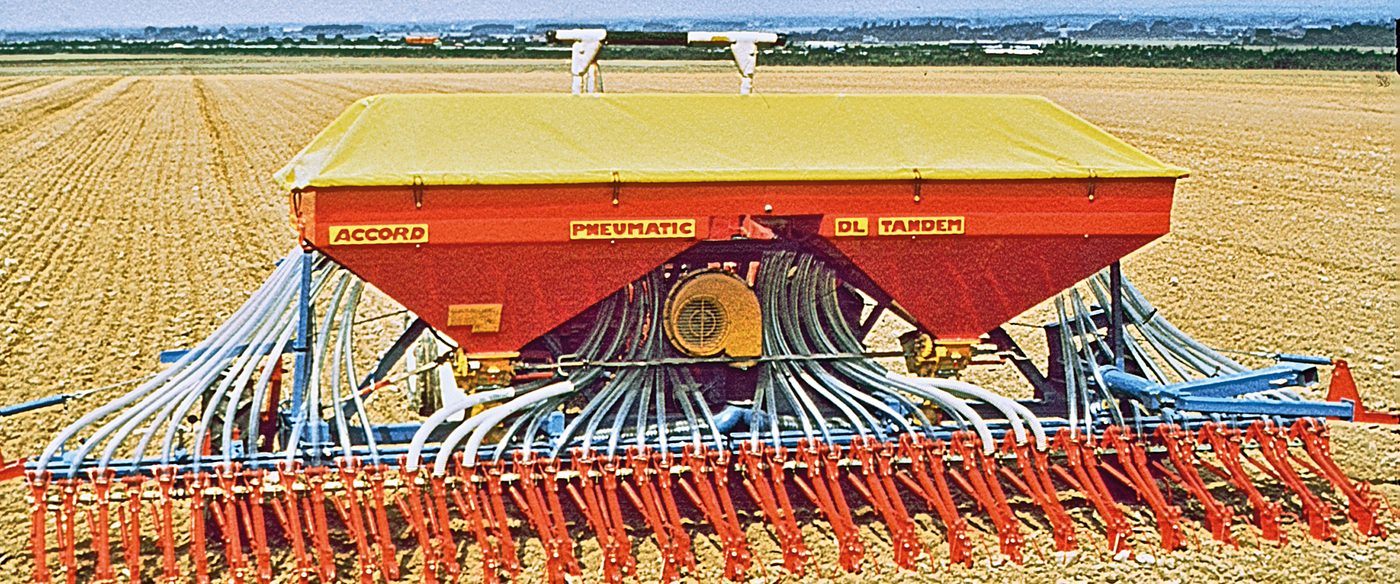
Forty years in ten pictures
Helmut Weiste made this selection for his own website: ten machines that show how a corrugated tube became a range, and a range became a worldwide standard. His own captions are kept here.
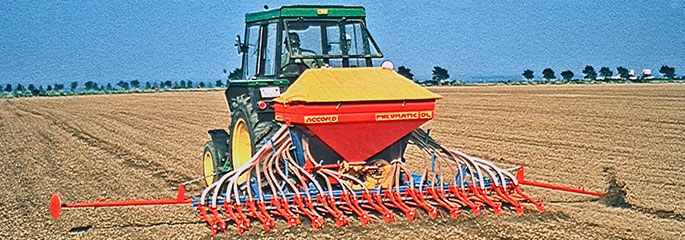
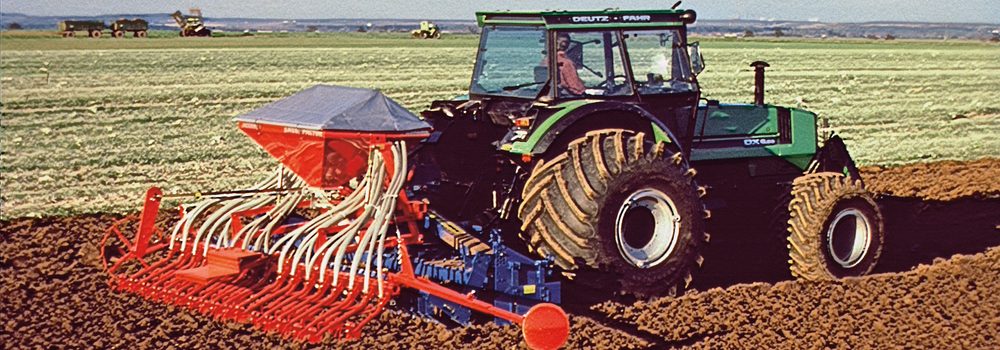
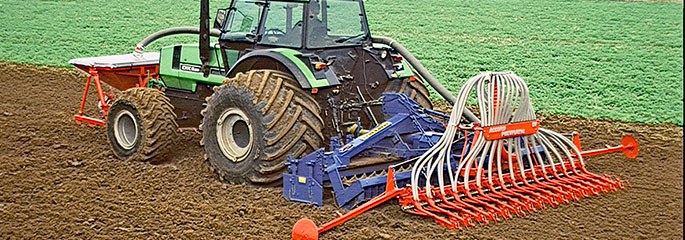
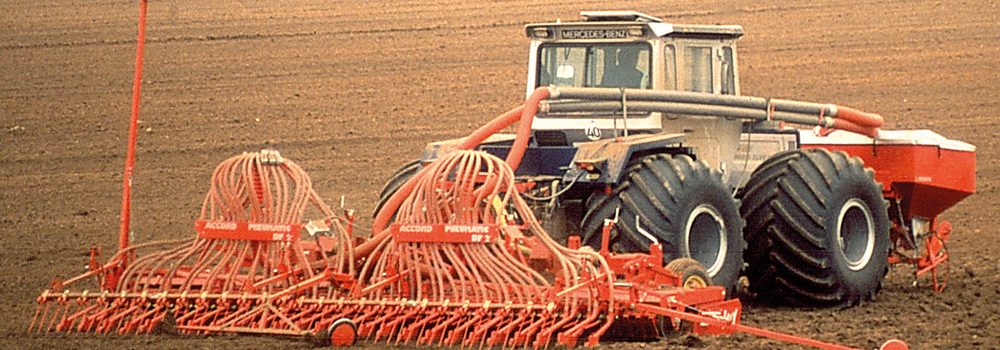
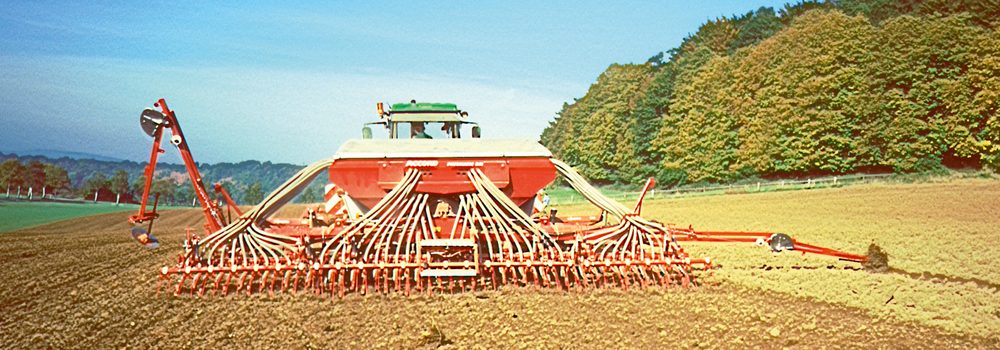
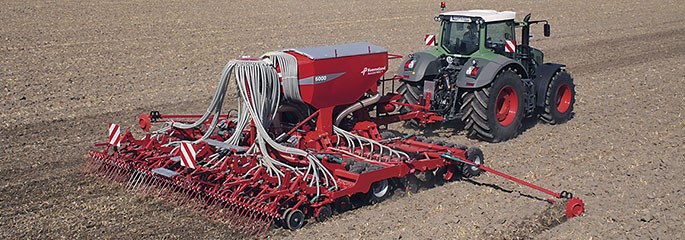
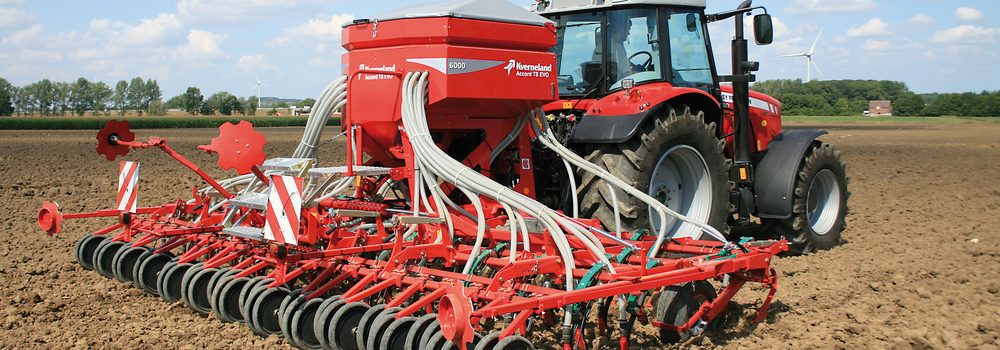
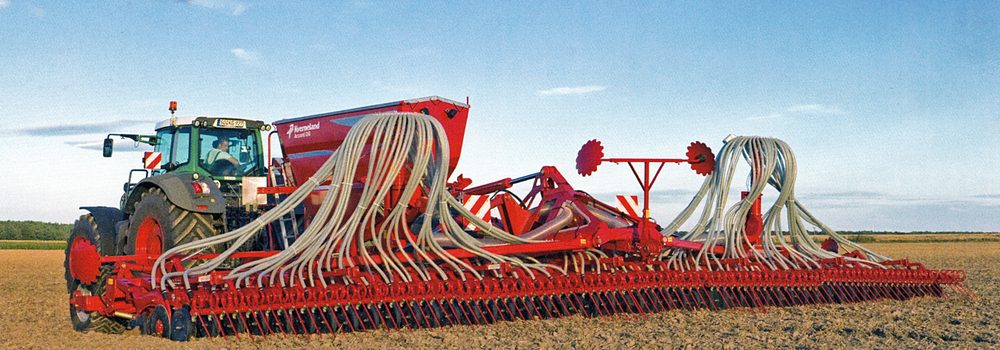
Planting, hoeing, laying
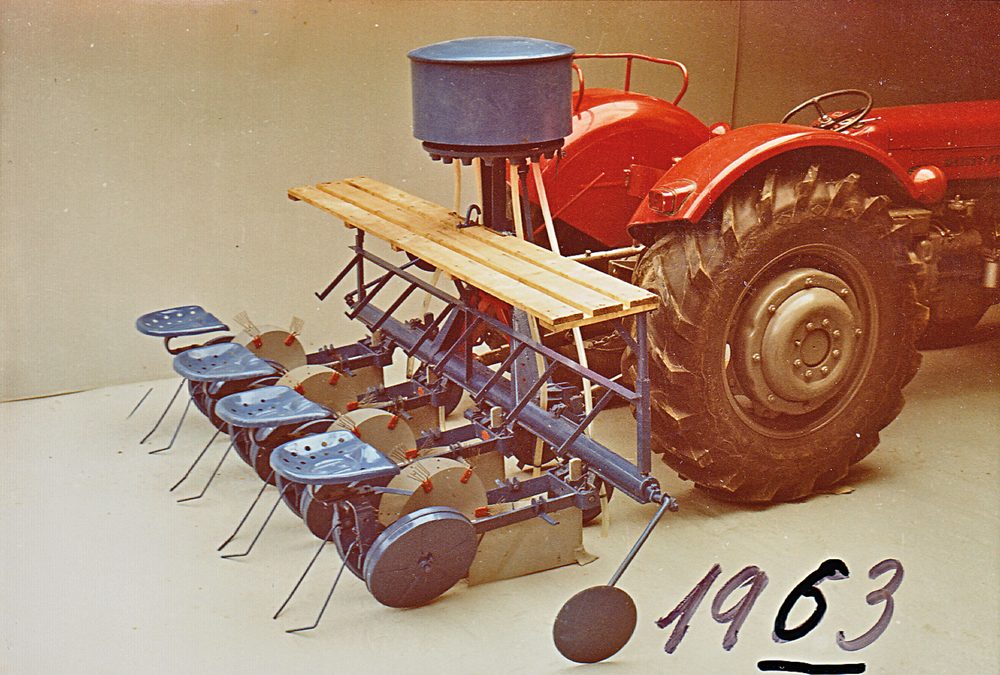
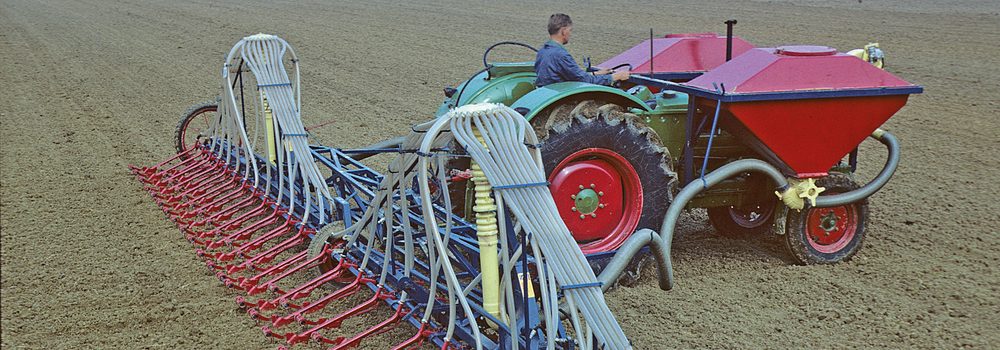
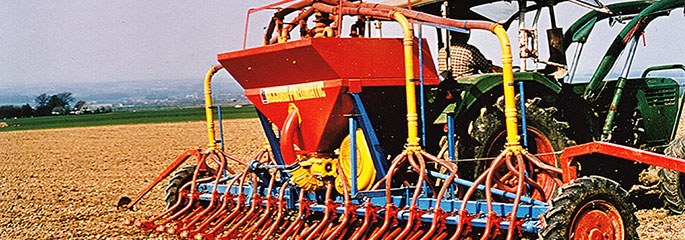
It began with the planting machine: the first workable steel machine in Germany, later the leading one in Europe. Potato planters and hoeing and ridging implements followed. At their peak in 1966 these products made up 90 per cent of turnover – 8,800 units a year. Four years later it was 4,000. The fall was so steep that it nearly took the company with it.
In 1963 came seedbed combinations: cultivator harrows, harrows and crumbler rollers which – unlike the competition's – the farmer could assemble himself into whatever combination he wanted. The idea that the customer combines and the manufacturer does not prescribe runs through the whole company history.
First generation: DS, 1968
After the field day the decision went – against Heinrich Weiste's own view – to a mounted drill with the hopper on the machine, five and six metres wide. Sales saw no market for the split design at the time. In hindsight it was a rejection of precisely the idea that three years later produced the air seeder in Australia.
The machines came too soon. For narrow row spacings, primary and secondary distributors were used without considering that the errors of each distributor add up. Sales stagnated at around 140 machines a year – at prices that did not cover costs.
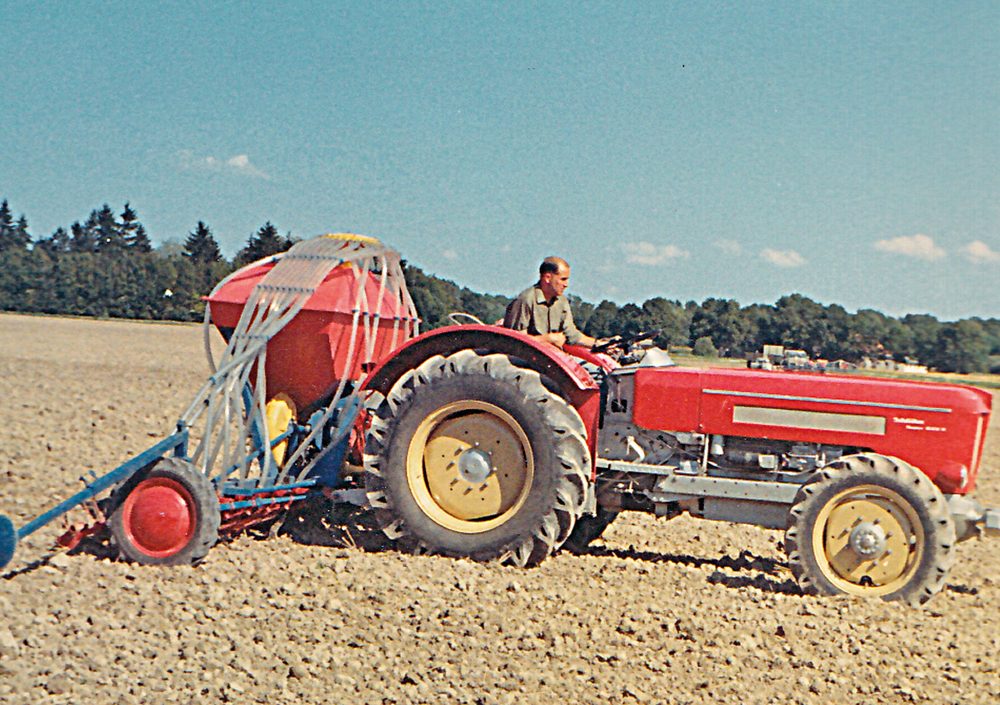
The DL module system, 1977
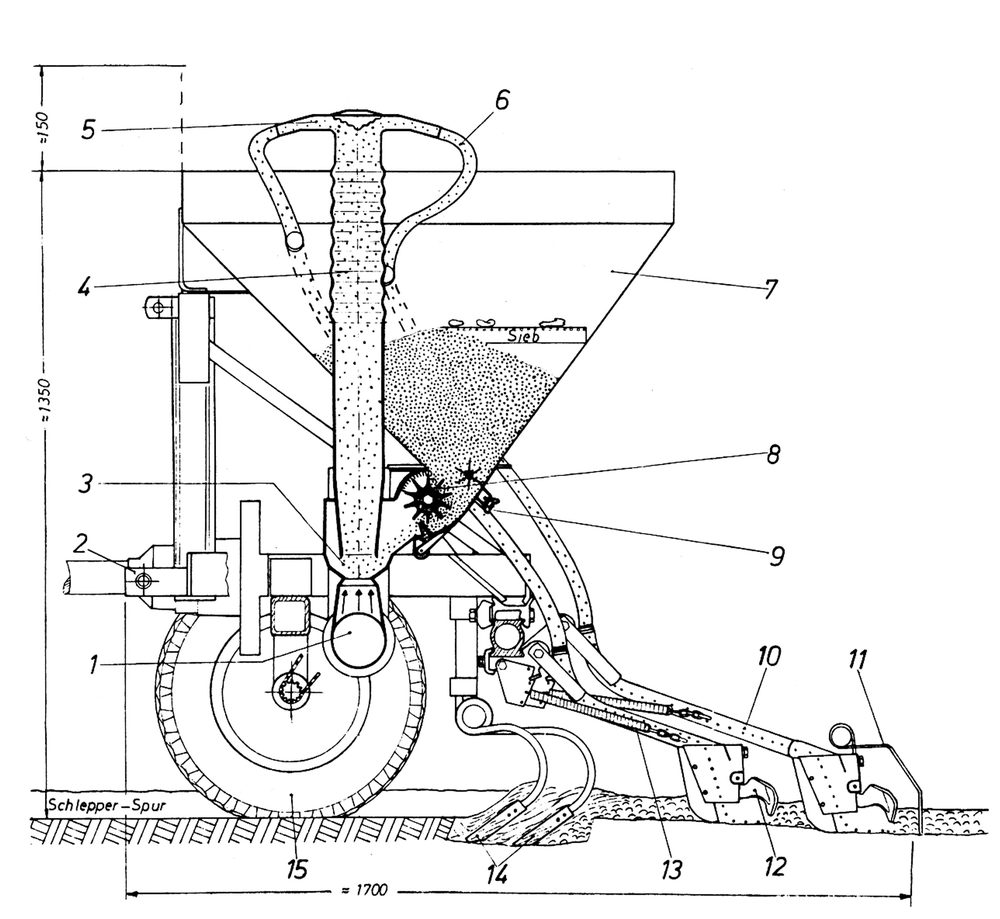
The basic concept was drawn on a sketch pad during a honeymoon. “DL” simply stands for light seed drill. What was new was not a component but the architecture:
- one standard seed cart with hopper, metering unit, fan and wheels
- an interchangeable, folding coulter rail clamped to it
- assembly only at the final station – short lead times even for special versions
Where mechanical drills needed a separate frame and hopper for every working width, here a whole range grew out of a few assemblies. After only two years of development ACCORD offered working widths from three to eight metres – and special widths such as 2.5, 3.5, 6.66 or 7.5 metres were easy to make without welding a single special frame.
| Type | From | Configuration | Working width |
|---|---|---|---|
| DL | 1977 | Light mounted seed drill | 3 – 4.5 m |
| DT | 1979 | Tandem: two DL hoppers, two coulter frames, one fan | 5 – 9 m |
| DA | 1982 | Piggy-back drill on the power harrow | 2.5 – 4.5 m |
| DF-1 / DF-2 | 1986 / 1989 | Front tank, split design | 2.5 – 6 m |
| DC | 1987 | Combination drill for seed and fertiliser | 3 m |
| DV | 1995 | Variable, twin hopper, folding compactly | 5 – 8 m |
DA – the bestseller
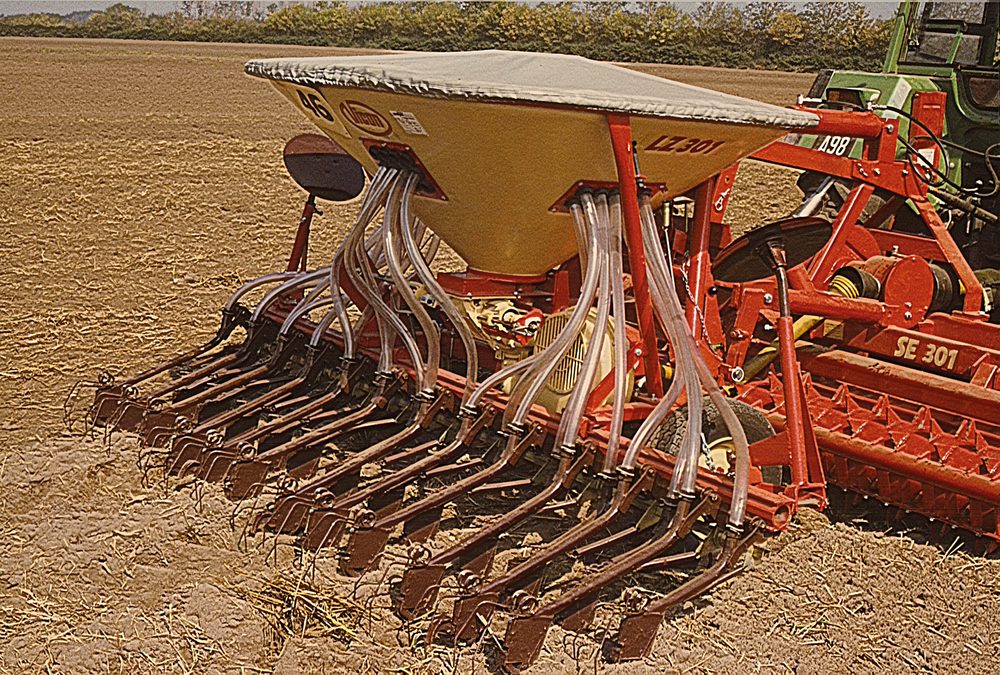
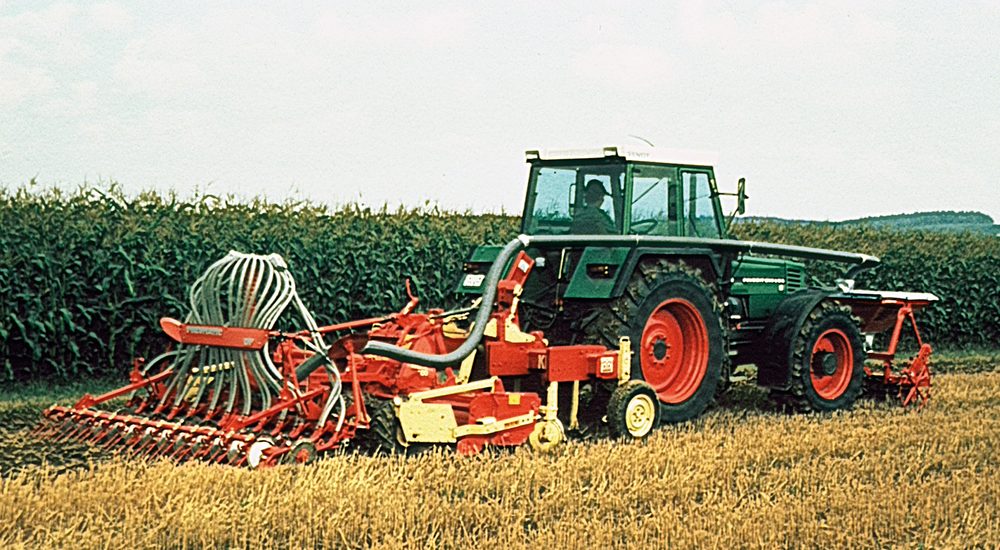
In the early 1980s drilling in combination with power harrows came into fashion. The drill hung behind the harrow and the centre of gravity was far back: the linkage was overloaded, the front axle relieved, the steering gone. Helmut Weiste put the hopper above the power harrow instead. Lifting frame, PTO shaft and wheels were saved – the machine is carried by the packer roller. That made the three-metre DA no dearer than a mechanical drill with a lifting frame.
The saddle triangle let it be mounted on power harrows of any make: Rabe, Lemken, Lely, Kuhn, Kverneland, Howard, Krone, Niemeyer, Maschio – and on tine rotors, short cultivators and passive seedbed combinations. Within four years more DAs were sold than DLs; in 1989, 1,500 of 2,550 machines, and by 1998 fully 70 per cent of sales.
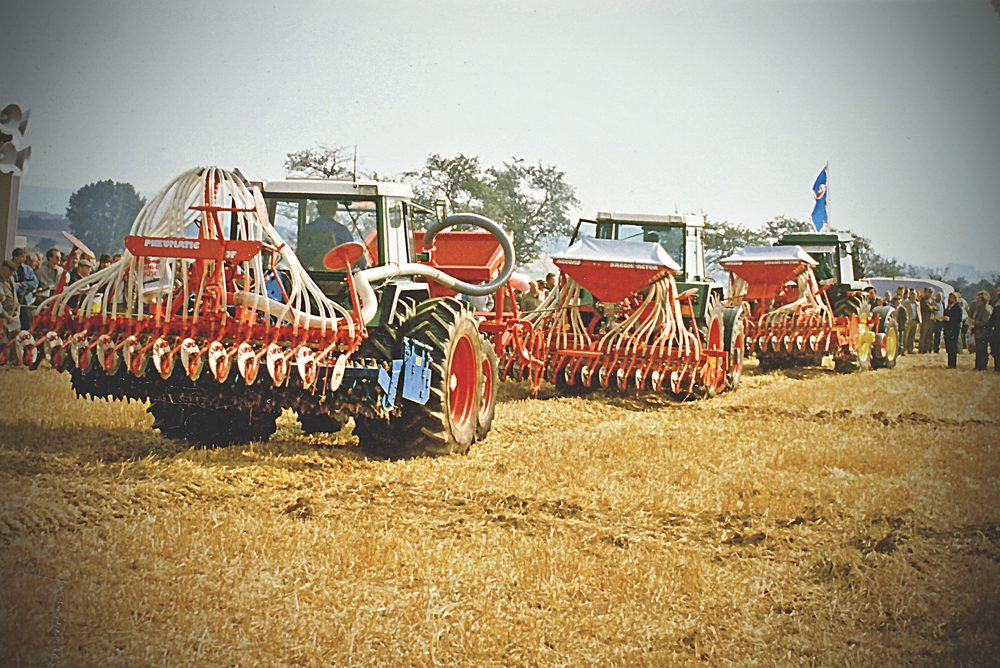
Because most power-harrow makers had no drill of their own, ACCORD willingly lent them machines for demonstrations. When the seeding combinations drove out to the field, people spoke of the “ACCORD parade”.
DF – the front tank
Back in 1966 ACCORD had already separated hopper from coulter. Twenty years later there was finally a market for it: at four and six metres the load on the rear wheels had become too great. Since many tractors now had front linkage and front PTO, a standardised mounting space was available at the front. The front tank also replaced the ballast weights.
DC – and the whisky slopes
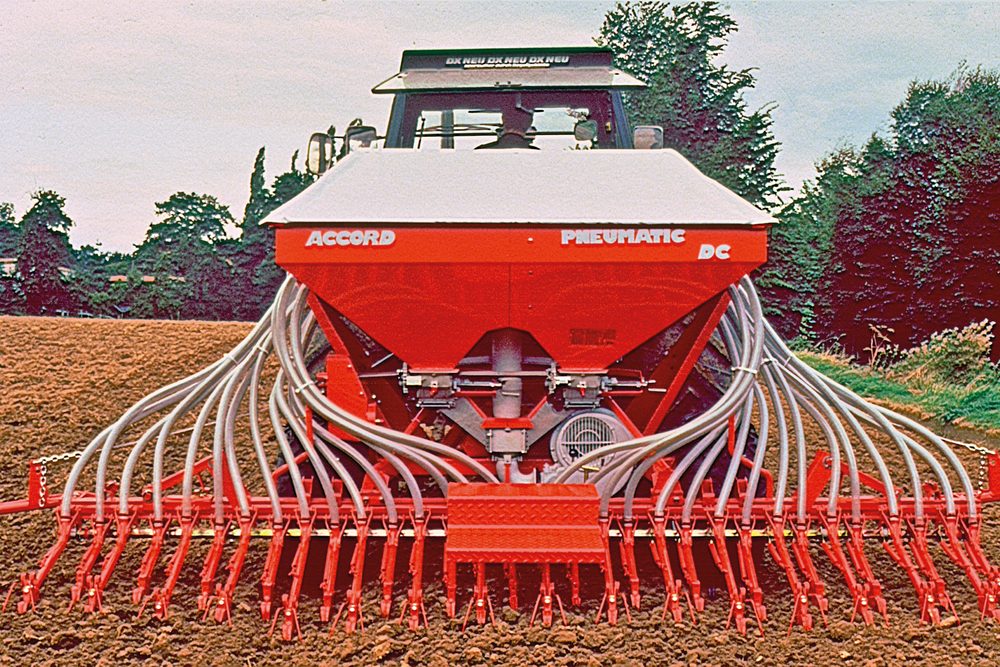
In parts of Scotland, barley for whisky is sown with a starter fertiliser in the seed furrow. In 1987 ACCORD built the DC combination drill with a divided hopper for exactly that. On Highland slopes of up to 40 per cent the farmers drilled across the slope – and the barley stopped sliding down the shallow hopper wall. Two weeks later, unsown strips appeared.
The answer was as simple as the system itself: a small air hose from the fan into the corner of the hopper. The stream of air along the flat wall kept the barley flowing. Inside the company the matter was known ever after as the problem of the whisky slopes.
Fertiliser spreaders
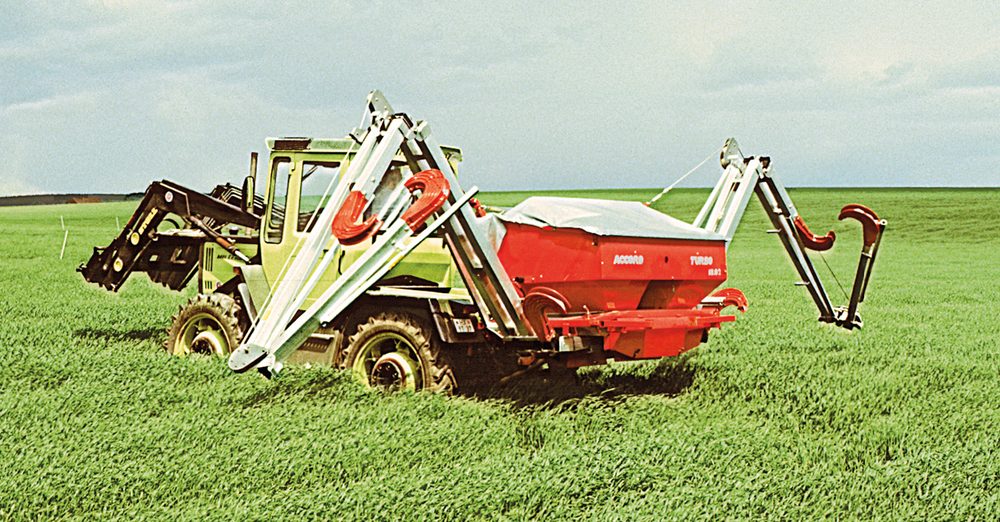
The ten-metre spreader of 1968 came out together with the first series of drills – and had to be taken back in numbers. The twelve-metre spreader, Helmut Weiste's first project of his own, brought twice the output and section control in 1969.
In 1983 came the TURBO: eighteen metres of spreading width with only fifteen metres of booms, suspended on a steel cable so that the outer section swings away on hitting an obstacle and is pulled back afterwards. Electronic rate control followed in 1988. Production ended in 1999.
Precision seeding: MONOPILL, MINIAIR, OPTIMA
With its stake in Fähse of Düren, ACCORD entered a second technology in 1985. The task there is a different one: not to divide a stream evenly, but to place every single seed at a defined spacing. The component that matters most was called, at ACCORD, the “seeding heart”.
MONOPILL-S – sugar beet
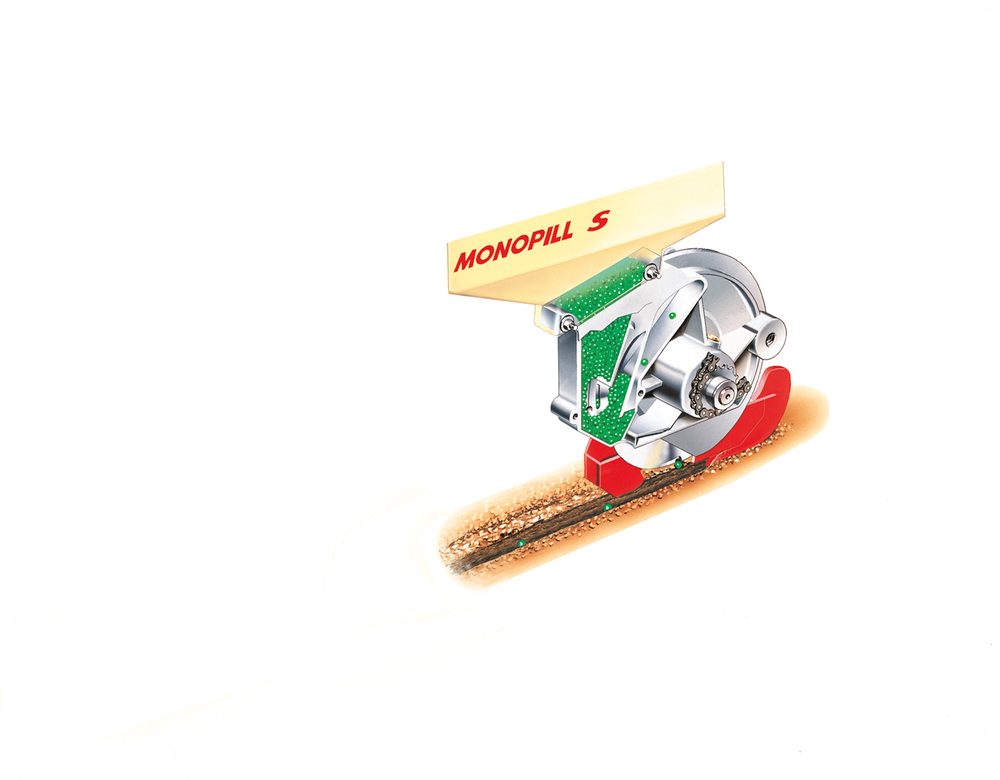
A seed disc with only four cells, spaced to match the mean drilling distance of 20 centimetres. The drive is set so that the circumferential speed of the disc exactly equals the forward speed – “zero placement”. The pellets then do not roll on, even at speed. Walter Schneiders solved the problem of filling the cells with a lateral internal feed, purely mechanical, without pneumatic assistance.
Because the seeding heart is slim, it sits deep in the coulter: a drop of only three centimetres.
MINIAIR-S – fine seeds
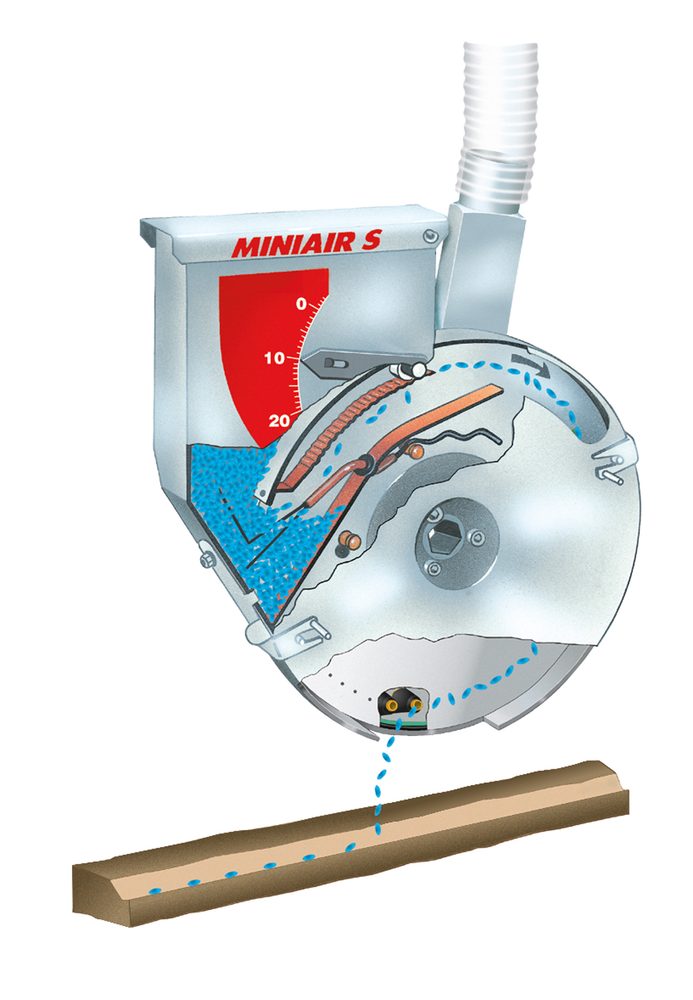
Previously, difficult vegetable seed had to be graded or pelleted to be singulated at all. The MINIAIR-S seeding heart manages it with untreated seed for the first time: vacuum, seed discs with fine suction holes, special scrapers and two ejection nozzles all have to work together. Seeds from 0.8 to 4.5 millimetres – onions, cabbage, spinach, carrots, radish, lettuce, fennel, dill, chicory, tobacco.
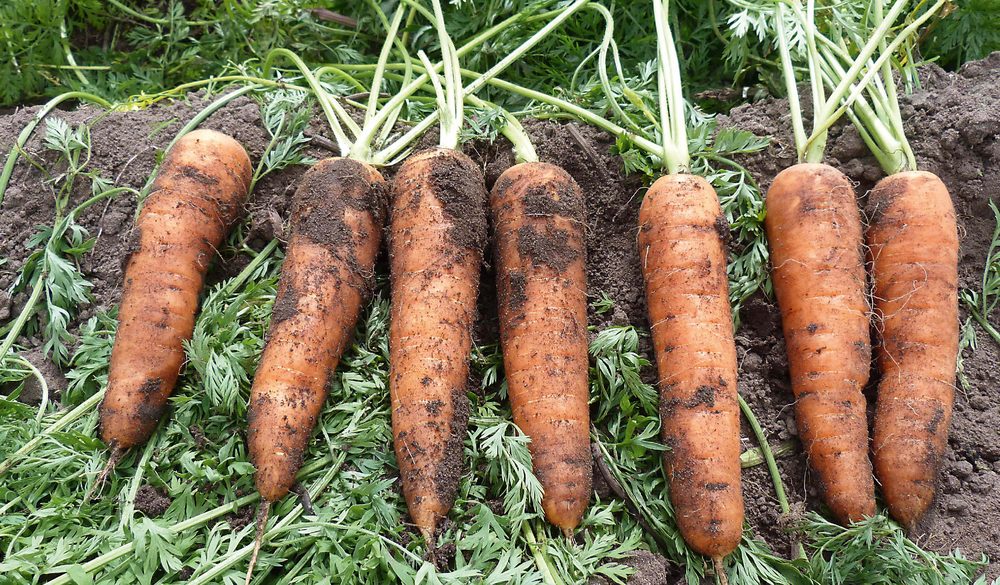
The benefit shows up on the plate: carrots of even size, lettuce heads of even size. The later Miniair-Nova achieves a narrow twin row with seed discs carrying two circles of holes – developed specifically for carrots.
OPTIMA – maize, soya, sunflowers
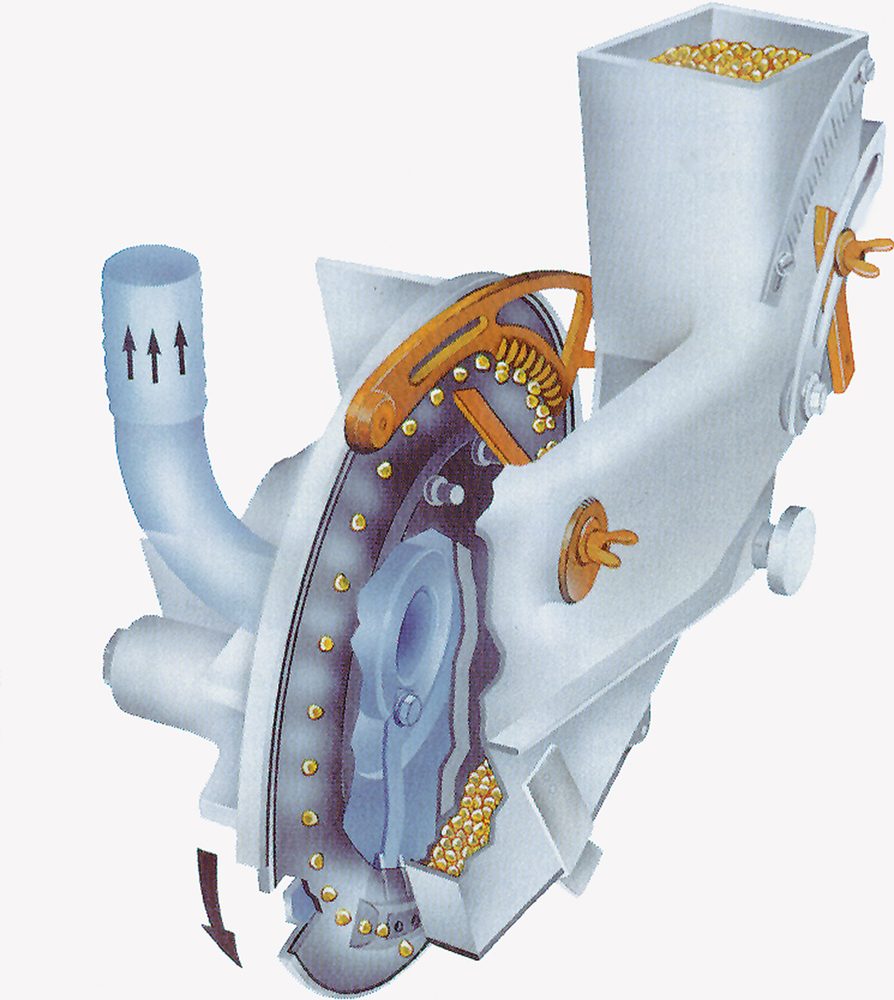
The OPTIMA seeding heart needs no seal at the outer edge of the seed disc: the disc is clamped to a flat rotating plate connected to the suction fan through its hollow shaft. No friction, no wear, low drive torque. It handles every large seed – from beet through maize, soya and sunflowers to peanuts and large beans.
The frame allows the seeding rows and their fertiliser coulters to be placed freely. On a three-metre frame, seven rows can be fitted at only 37.5 centimetres apart: narrow-row sowing. In field trials it gave 5 to 10 per cent more yield than 75 centimetres – plus earlier canopy closure, less erosion and evaporation, and even ripening.
With these three ranges ACCORD offered the most comprehensive precision-seeding programme on the market – and, together with its drills, was the first full-liner in seeding technology.
What came after 1999
Helmut Weiste left the management at the end of 1999. Development in Soest went on – under Dr Till Meinel, with growing electronic content and the Kverneland Group's mechatronics centre behind it.
Tine Seeder TS, 2002
A cultivator drill with tine coulters, at first for the dry, hard soils of Spain. George Randles saw a prototype in Soest and ordered one for England. The first series sold out completely; before long the TS overtook the old DL. The TS-EVO with five tine rows followed in 2009.
MSC, from 2001
The modular seeding combination: cultivation, sowing and fertilising in one pass. The decisive find was made at a cereals event in eastern England – the short-built “Vario-Disc” disc harrow by Evers of the Netherlands.
DG-9000 / 12000, 2009
Twelve metres of working width, a 6,000-litre hopper, up to 140 hectares a day. The folding kinematics were simulated on the computer; unfolding takes under two minutes. With it came the CX-Ultra coulter with a 41-centimetre disc.
FlexCart, 2012
A seed cart to which both drill frames and precision seeders can be hitched. Helmut Weiste had supplied the design as a consultant as early as 2003, and the prototype stood at Agritechnica that year. A competitor launched a virtually identical machine in the same year as Kverneland.
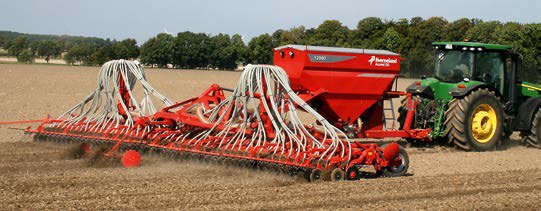
Electronics became the driver of innovation: ISOBUS terminals, electrically driven metering units for each seeding row, opto-electronic grain counting – and, with GEOseed, placement of the seed in a triangular or square pattern. Because every plant then has the same space, the crop grows more evenly; and because hoeing is possible along and across the rows, it opens new prospects for organic beet growing.