
Worldwide impact
The long way from Melbourne to Saskatoon – and back
The invention did not prevail where it was made. It went first to Australia, then to North America, then east – and came back wider, more efficient and more versatile.
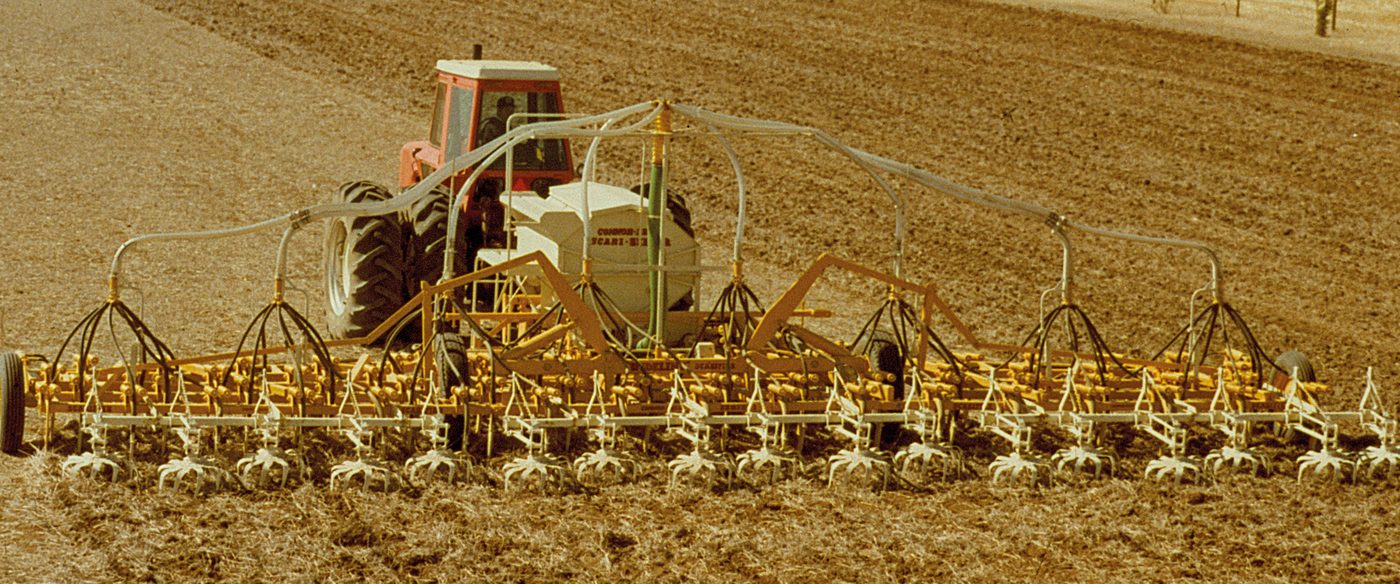
Australia: the world's first air seeder
In the summer of 1970 an elderly gentleman turned up unannounced in Soest: Mr Shea from Australia had seen the system at the Royal Show in England. Heinrich Weiste was out, so his son received him. Shea dictated the details about his company and about Australian requirements straight onto Helmut Weiste's dictating machine, and ordered two sets of components.
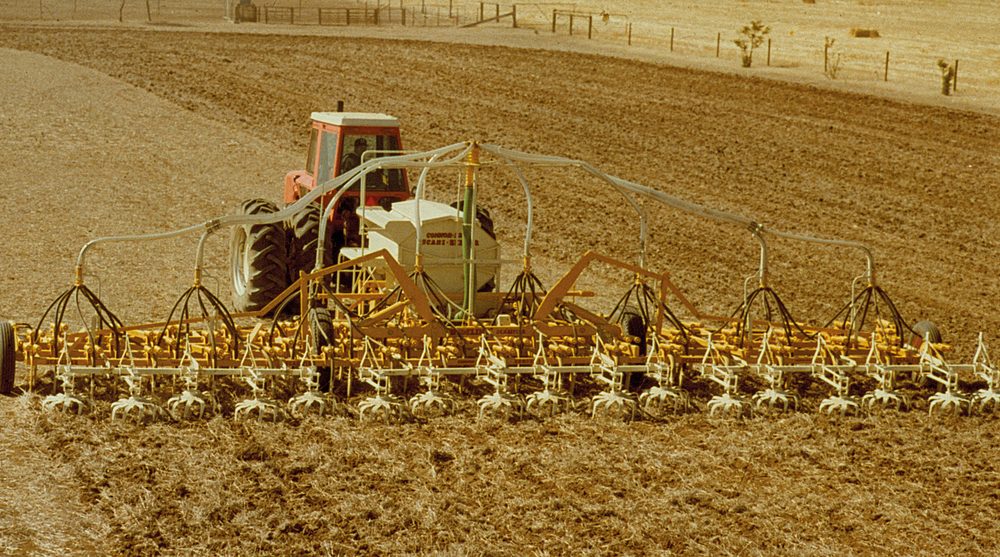
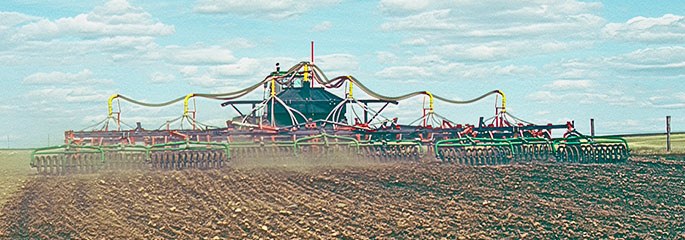
In December 1971 Helmut Weiste flew to Sunshine near Melbourne. What Connor Shea had built there was called the Wideline Seeder: a seeding cultivator that sows straight into the stubble after harvest – cultivating, sowing and fertilising at once, ten metres wide. Working time and energy demand fell by 50 to 60 per cent.
What mattered most, though, was the ecological effect: wind erosion is prevented and losses of water to evaporation minimised. In a country where arable farming is possible on only ten per cent of the land, that was no side issue. Within ten years the air seeder displaced conventional drilling and reached a 65 per cent market share.
At the negotiating table sat a 26-year-old engineer facing seasoned managers. His father had instructed him to grant only a non-exclusive licence. Helmut Weiste decided otherwise and signed the first exclusive licence agreement.
They were taken with the new seeding technique and confident that they could roll up the market with it. I felt I could trust them. Helmut Weiste on Mr Connor and Mr Shea, December 1971
Other Australian manufacturers followed: Gason (1977), Allfarm (1978), John Shearer (1978, the first with a pressurised tank system), Forward Engineers with Fuson (1980), Napier (1978). A thousand air seeders were sold in 1980 – by 1983 the figure had fallen to 300 because of the worst drought on record.
North America: John Deere, Friggstad, Flexi-Coil
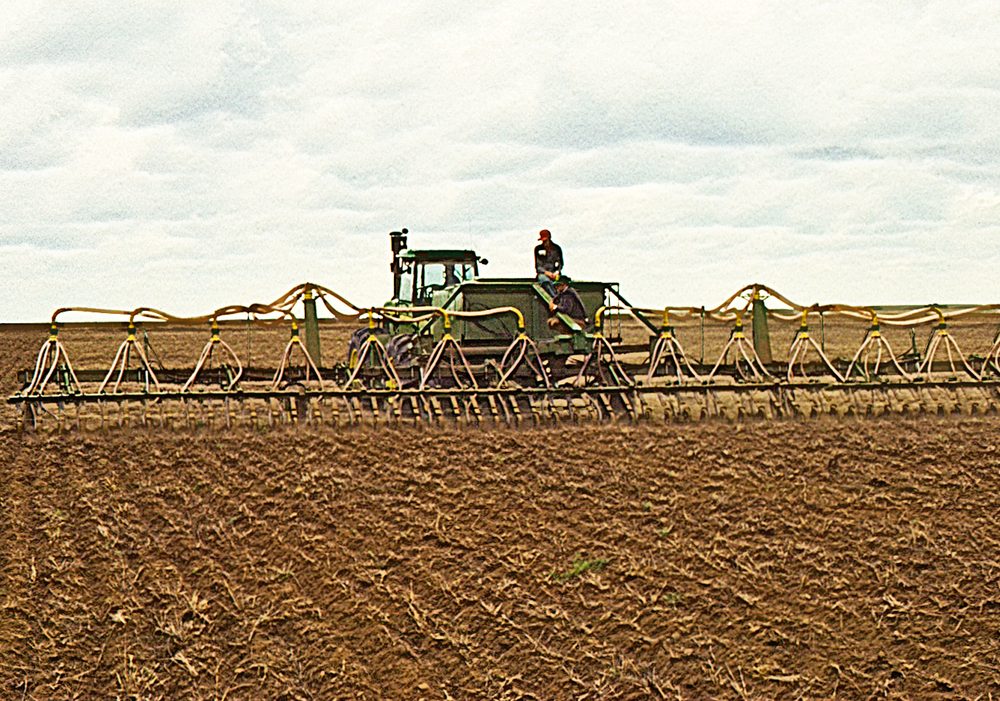
In 1976 contact with John Deere was re-established through the Dutch importer. In September 1977 Helmut Weiste flew to Des Moines, Iowa – and had a surprise there: the head of development laid before him a letter from his father recommending John Deere adopt his own round metering unit. Helmut Weiste explained matter-of-factly why it was unsuitable. That settled it.
On a farm in the far west of Kansas he saw pneumatic wheat sowing across twelve metres for the first time, with heavy tine coulters straight into unploughed ground. One driver covered 64 hectares a day.
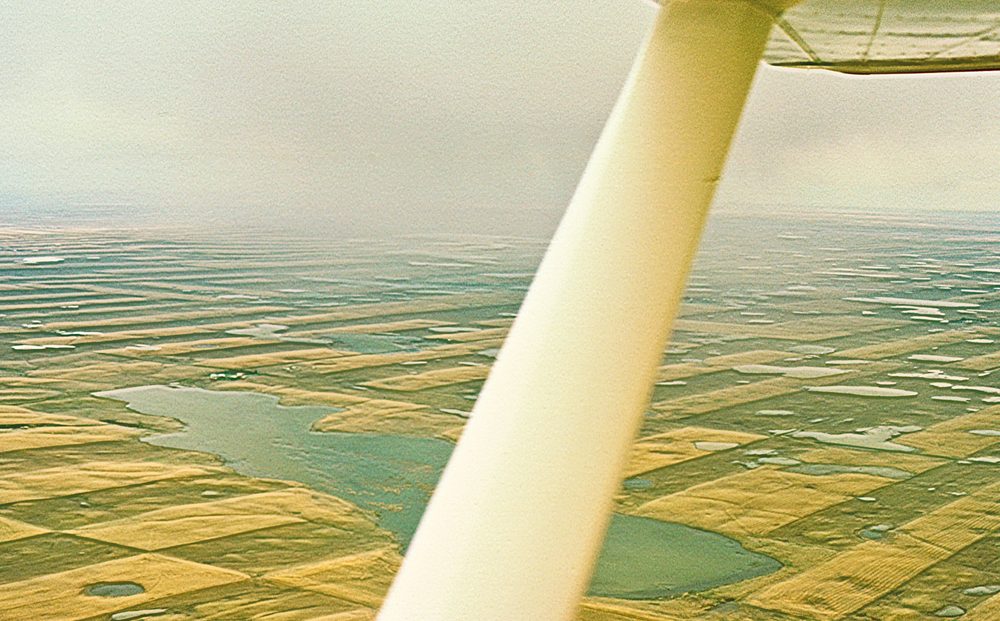
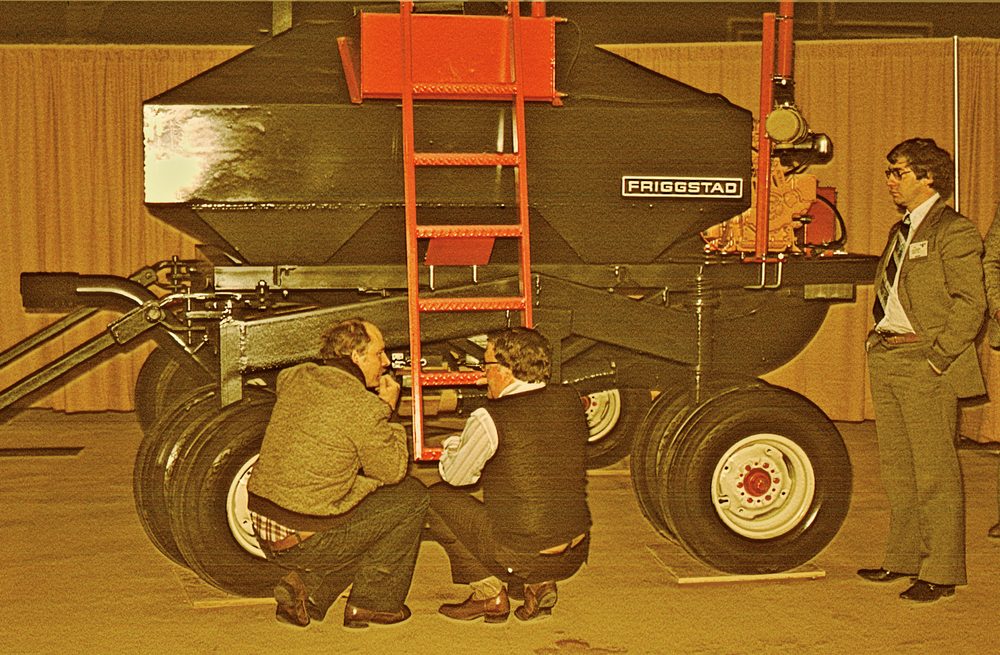
In February 1978 Terry Friggstad from Saskatchewan visited Soest. Two months later he collected Helmut Weiste from Regina in his own aircraft – and shortly after take-off handed him the controls.
At Friggstad, European calculation met Canadian improvisation. The contrast between the two partners stayed with Helmut Weiste: at John Deere there was precise project planning and a team of experienced engineers. At Friggstad a single creative designer turned his own experience as a farmer into better machinery, with enthusiasm.
“That's not far at all, just round the corner.”
Two brothers had bought the widest air seeder that could be built with ACCORD distributors: 56 feet, 17 metres. Seed and fertiliser were blowing back out of the sluice. After an hour-and-a-half drive “just round the corner”, Helmut Weiste looked through the intake grille at the coasting impeller – it was turning backwards. The pressure and return lines on the hydraulic motor had been swapped. Their 600 hp tractor, “HONEY BEE”, the brothers had built themselves over the winter out of Caterpillar parts.
In November 1980 the trade magazine Implement & Tractor ran a cover story on “the curious route of this technology from Germany via Australia to America” and listed twelve suppliers. Ten years later, at the Air Seeding '90 symposium in Regina, thirteen manufacturers demonstrated their machines in the field – all but one with PNEUMATIC distributors.
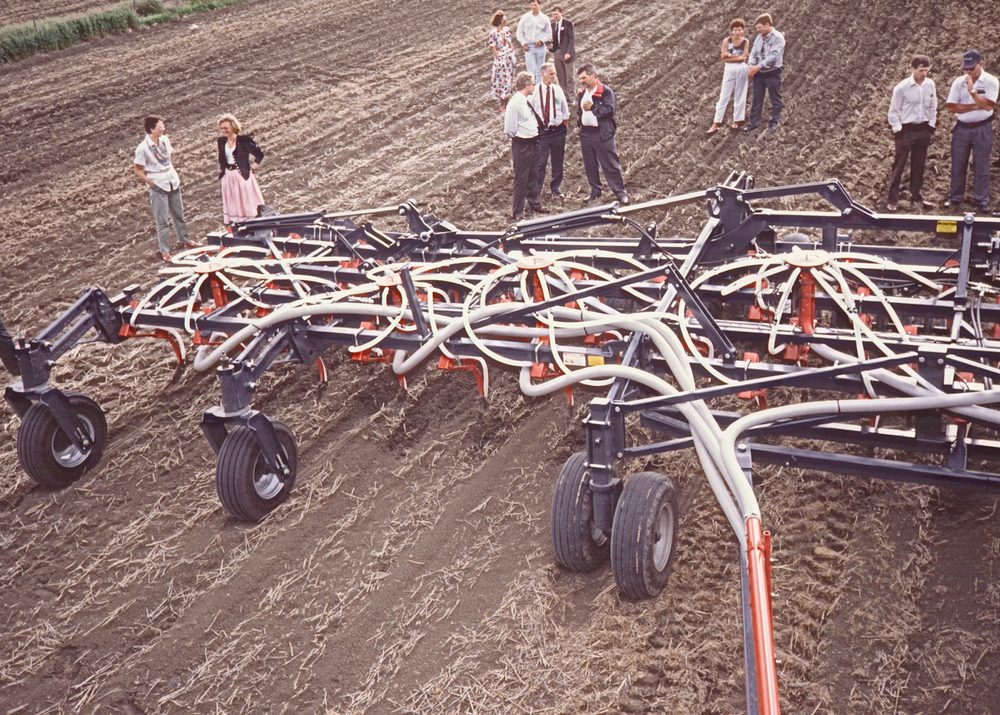
The conference concluded that only pneumatic seeding can meet the ecological requirements – and do so with far more efficient sowing. In the United States it is now a legal requirement to leave at least 50 per cent of straw residues on the soil surface.
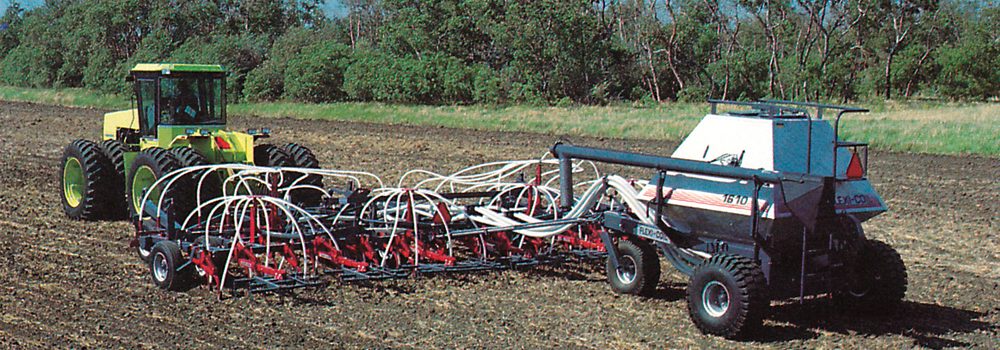
Out of Friggstad's bankruptcy in 1983 came Flexi-Coil: Terry Summach bought the firm and took Friggstad on as a designer. In the 1990s it became the leading maker of air seeding technology; the air seeder became the air drill, and minimum-till became no-till.
If we had not changed over back then, we would not be farmers today. Roy and Ian Reid, Western Australia, on adopting air seeding in 1983
The east: from the GDR to western Siberia
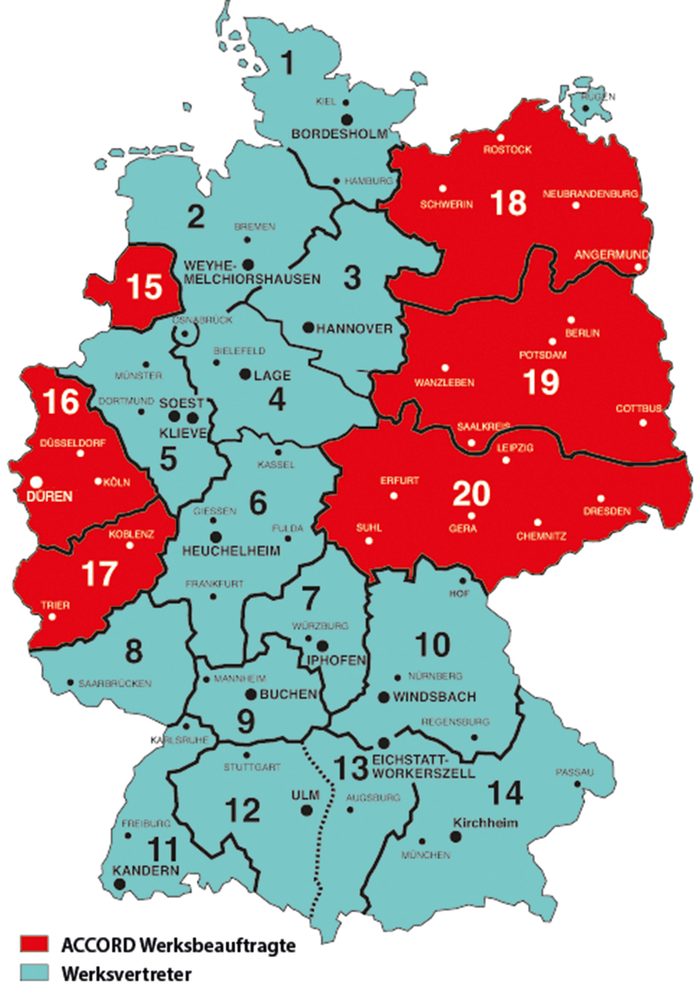
The fall of the Wall opened a market the wide machines from Soest had been made for: collective farms of 1,000 to 5,000 hectares with fields of over 100 hectares. But there were no dealers – for forty years everything had been allocated centrally. So ACCORD built up a network of stocking dealers: conveniently situated collective farms and central repair workshops, trained not only in machinery but also in bookkeeping and value-added tax.
At the end of 1989 Peter Penner, an agricultural engineer from Orenburg, had moved to Soest with his family. Driving round the industrial estate he had made a note of the company – farm machinery suited his training. The next day he stood in the entrance hall, saw a certificate in Russian, and the marketing manager spoke to him.
In February 1992 a delegation took the night train to Kamenka, 800 kilometres south-east of Moscow: three Russians, three Germans, a Dutchman and an American, two sleeper compartments, tea, vodka and a discussion about agricultural engineering after Gorbachev. The outcome was sobering – the planned licence production foundered on the transition from planned to market economy.
So the market was opened up differently: with machines from Soest. Ukrainian farms lacked a wide but light precision seeder that the available 80 hp tractors could pull. Gerd Stüttgen designed the frame of the OPTIMA-L within a week.
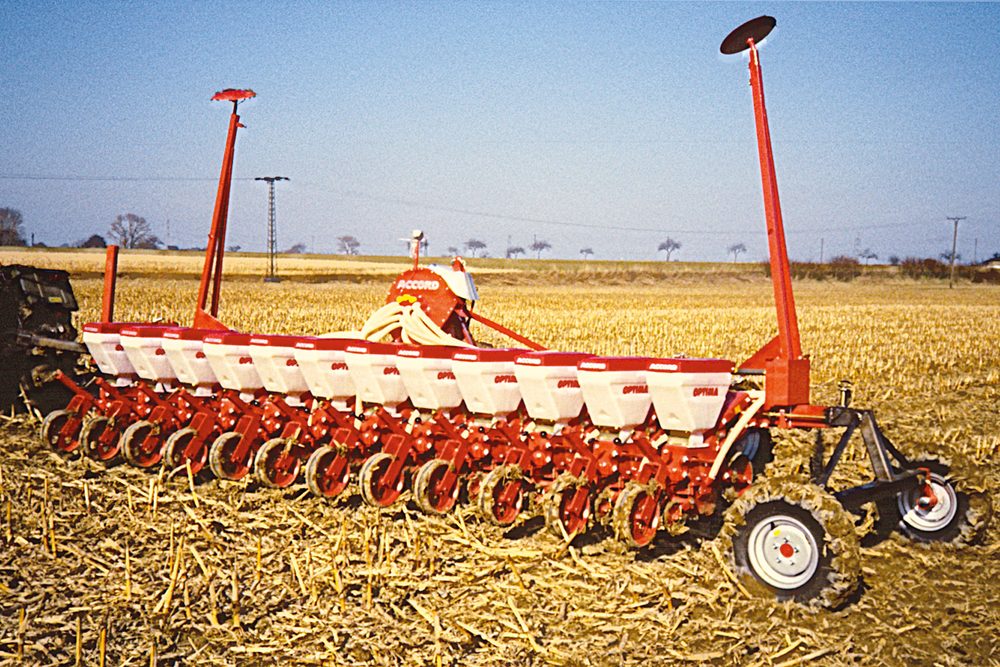
In the early years Peter Penner travelled close to 200 days a year. An OPTIMA sowed 400 to 500 hectares a year, a DT drill 1,000 to 1,200. The sales territory stretched from Kursk to Krasnodar – more than 1,000 kilometres, almost the length of Germany – and later as far as Novosibirsk and the Altai region.
Found again
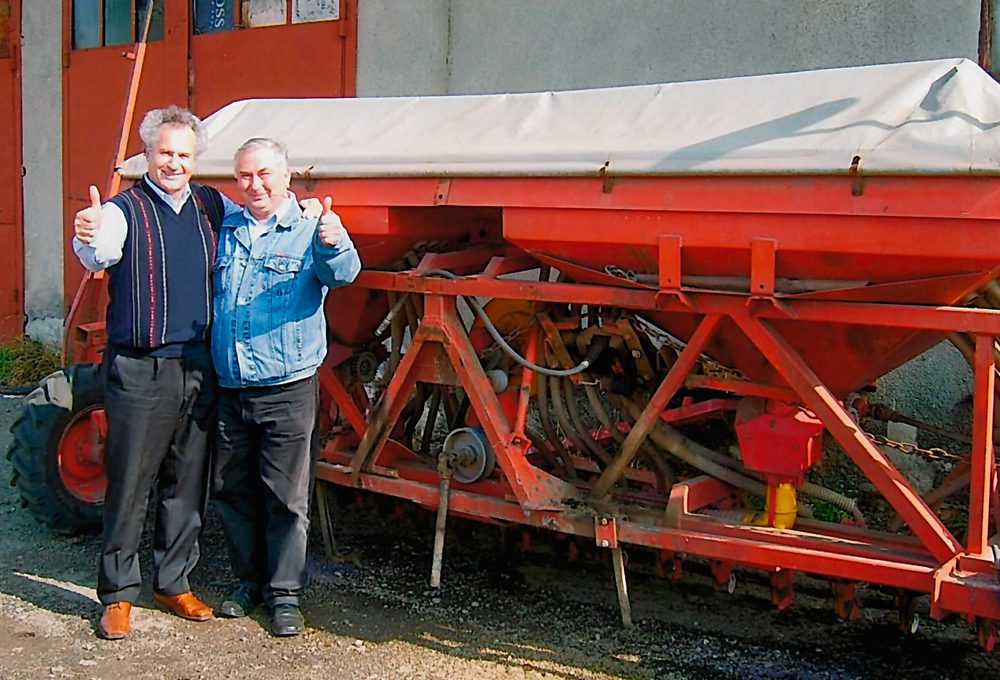
In 1994, in the Ivano-Frankivsk region, Peter Penner came across one of the forty DT seed drills delivered to the Soviet Union in 1984. The state had given it to a collective farm because its young manager ran the place successfully. In ten years the machine had sown some 6,000 hectares; only the coulter tips were worn. The farm's second machine, copied in Belarus, had stood idle for years: no corrugated tube, a worn metering unit, a frame broken several times.
In March 1993 an enquiry came from Kazakhstan: OPTIMA-L machines were needed by the 29th of the month for a state-funded sugar beet project, because the original supplier had pulled out. ACCORD released production before government approval had arrived. Twelve machines were bundled by CAD so that they would fit into an Il-76, and loaded on 31 March in under an hour. A service engineer flew to Almaty – 6,000 kilometres from Soest.
Users and licensees
The success of the system rests not only on ACCORD's own machines. From 1977 the company supplied other manufacturers with component kits – firms that developed their own seeding methods from them. In 1985 there were 50 units; by 1989, 1,330: more than half of total sales.
| From | Company | Country | What came of it |
|---|---|---|---|
| 1971 | Connor Shea | Australia | Wideline Seeder – the world's first air seeder |
| 1970 | Cantone | Italy | Supercultivator: ploughing, fertilising and sowing in one pass |
| 1972 | Mosonmagyaróvár | Hungary | Licence production of the 5 and 6 metre drills |
| 1977 | Info-agrar (Justus) | Germany | First user in Germany; non-plough establishment |
| 1978 | Friggstad | Canada | 48-foot air seeder with “walk over wheels” |
| 1980 | Olt | Yugoslavia | Single-axle drills with disc coulters |
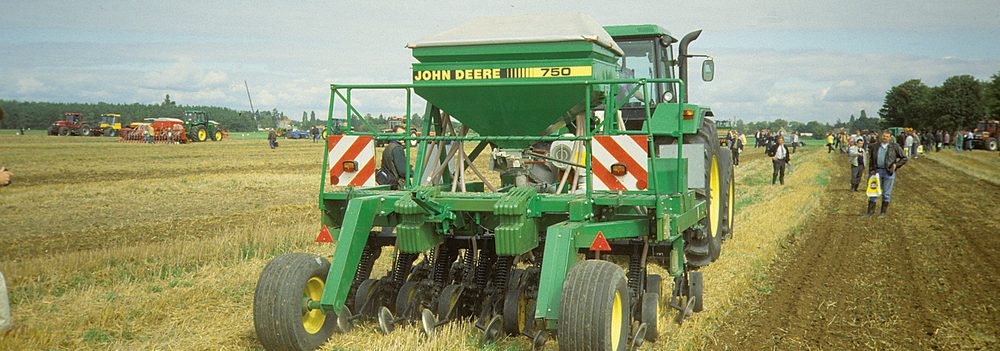
| 1981 | John Deere | USA | 665 Central Metering Seeder, later the 750 A and 740 A for Europe |
| 1981 | Vicon | Netherlands | Octopus air seeder – an early platform strategy |
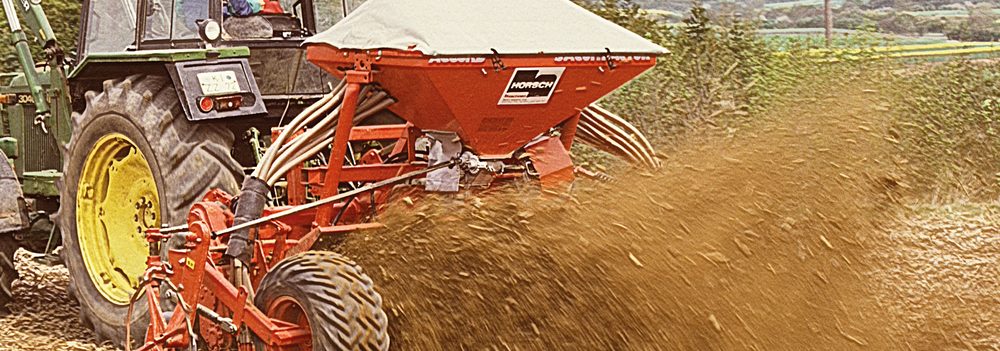
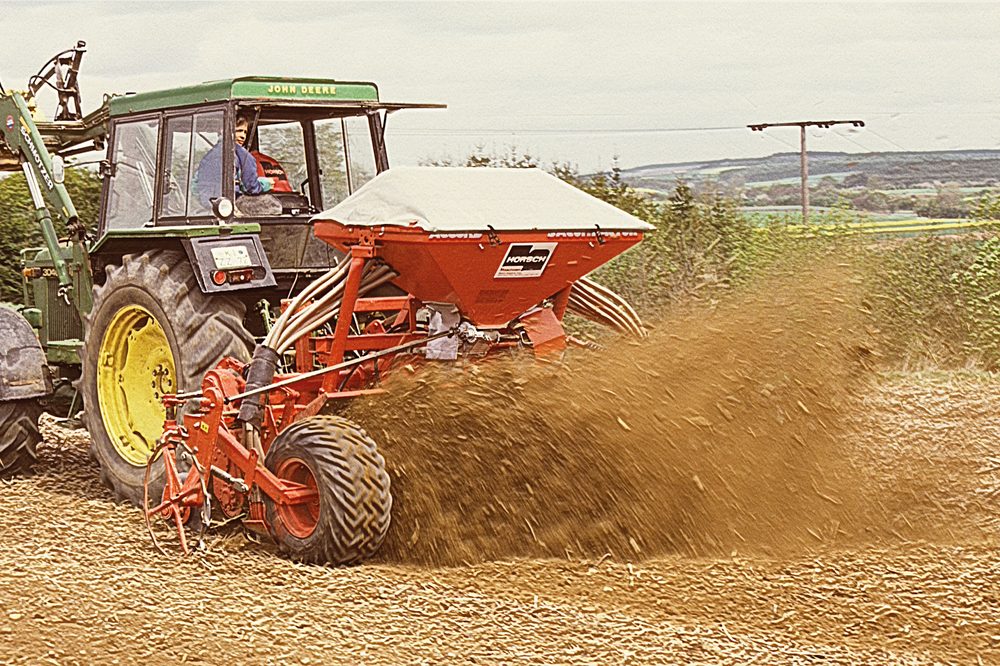
| 1982 | Horsch | Germany | Sä-Exaktor, 12-metre drill, later the Sprinter |
| 1984 | Dutzi | Germany | Continuation of the Justus machines |
| 1986 | Rau | Germany | Roto-Sem: seed into the soil flow behind the tine rotor |
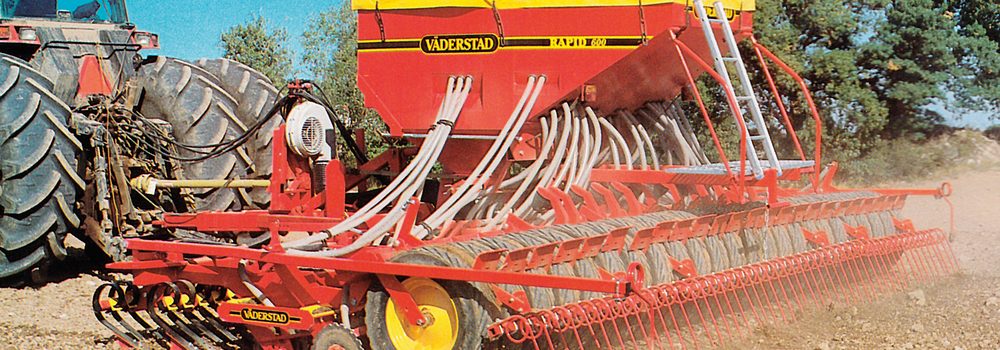
| 1990 | Väderstad | Sweden | Concorde, later the Rapid |
| 1992 | Tinto Industries | Zimbabwe | Super-Nova with star-wheel coulters |
| 1998 | Sola | Spain | Cultivator drills for dry soils |
“The exchange of know-how and the creativity on both sides created the multitude of specific seeding combinations offered to farmers today,” Helmut Weiste writes. He adds: quite a few firms copied the system as soon as the basic patents expired.
To the list of user companies, universities and journals →
Where the system stands today
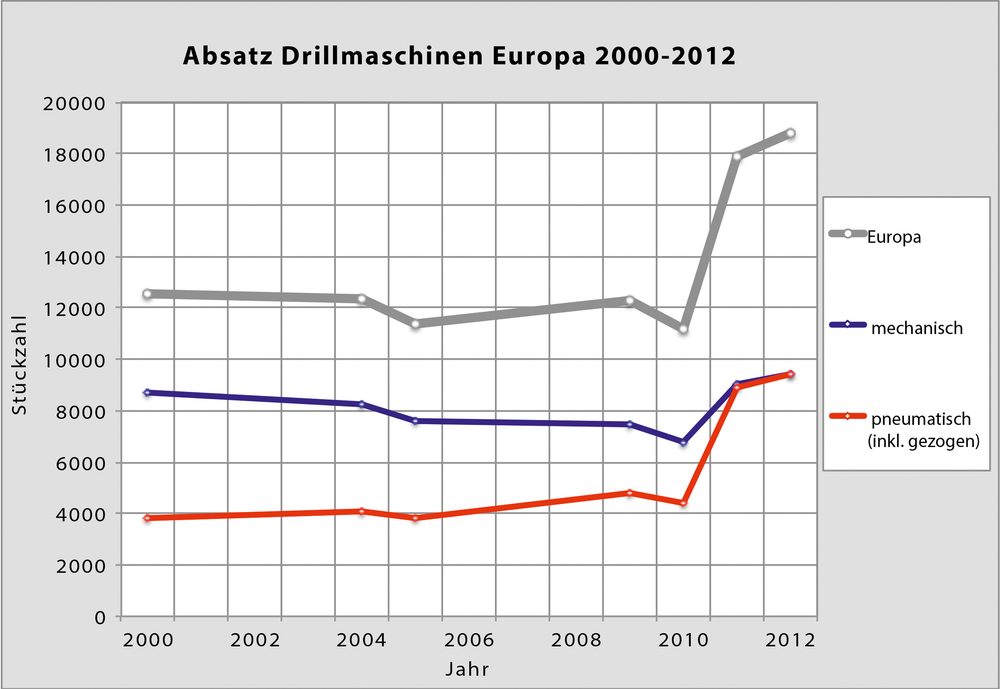
In Europe the share of pneumatic drills and seeding combinations in units sold rose from 30 per cent in 2000 to 50 per cent in 2012. Allowing for their greater working widths, Helmut Weiste estimated that almost 60 per cent of Europe's cereals are sown pneumatically. Around 25 European manufacturers use the principle – “some copy it”.
Of the eleven North American makers of air seeders and air drills that Helmut Weiste was able to identify in 2012, ten used the principle of the ACCORD distributor. Only one, Morris, used a flat distributor of its own design.