
Timeline
1945 to 2012
Sixty-seven years in one timeline: the stages of the company Heinrich Weiste & Co., of the family, and of the technology invented there.
The beginnings
- 1945Helmut Weiste is born
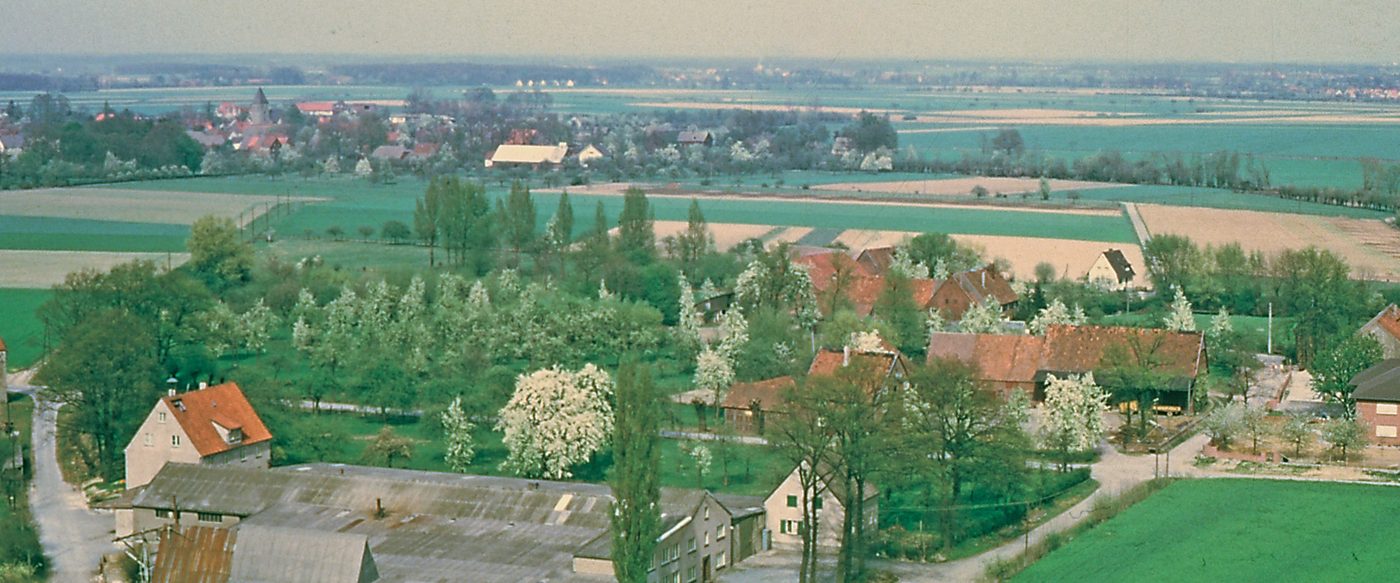
On 9 June, a month after the war ended, at Bad Sassendorf – son of the farmer Heinrich Weiste and his wife Marie, née Trelle. He grows up with three sisters in Sieningsen, a village of six farms in the Soester Börde.
- 1946The first steel planting machine
On his return from captivity, Heinrich Weiste builds the first workable planting machine in Germany in the former cattle shed. He had made wooden models of it before the war.
- 1948Heinrich Weiste & Co GmbH is founded
The company starts on the family farm. Because every part is made on piecework – Akkord in German – the brand is soon called AKKORD, changed years later to ACCORD. The slogan: “With the Akkord planting machine you plant at Akkord speed.”
- 1950sTrials in Italy
Ten-year-old Helmut accompanies his father to trials in the Po valley. The results: up to ten times the planting output of hand work, and 20 to 40 per cent more grain yield in maize. At the rice institute in Vercelli two machines are hung in front of and behind a crawler tractor.
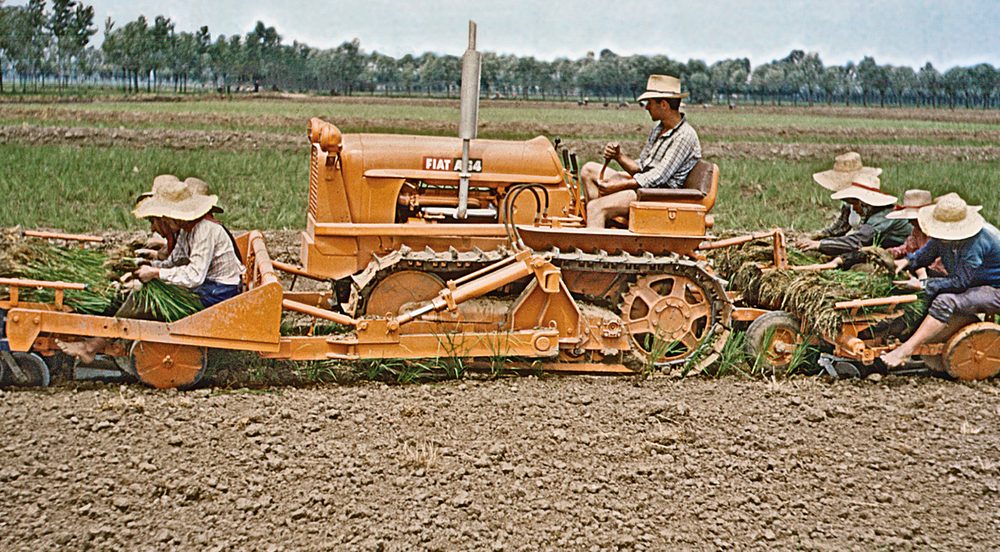
Two planting machines front and rear on a crawler tractor: 2 m working width, eight narrow rows – Rice Research Institute, Vercelli.ACCORD – Helmut Weiste - 1961The move to Soest
The Sieningsen site is fully built over. An office building goes up first in the south-eastern industrial estate; the production halls follow in 1963. The 95-metre concrete apron is laid by the workforce itself – with two Unimogs converted into concrete mixers.
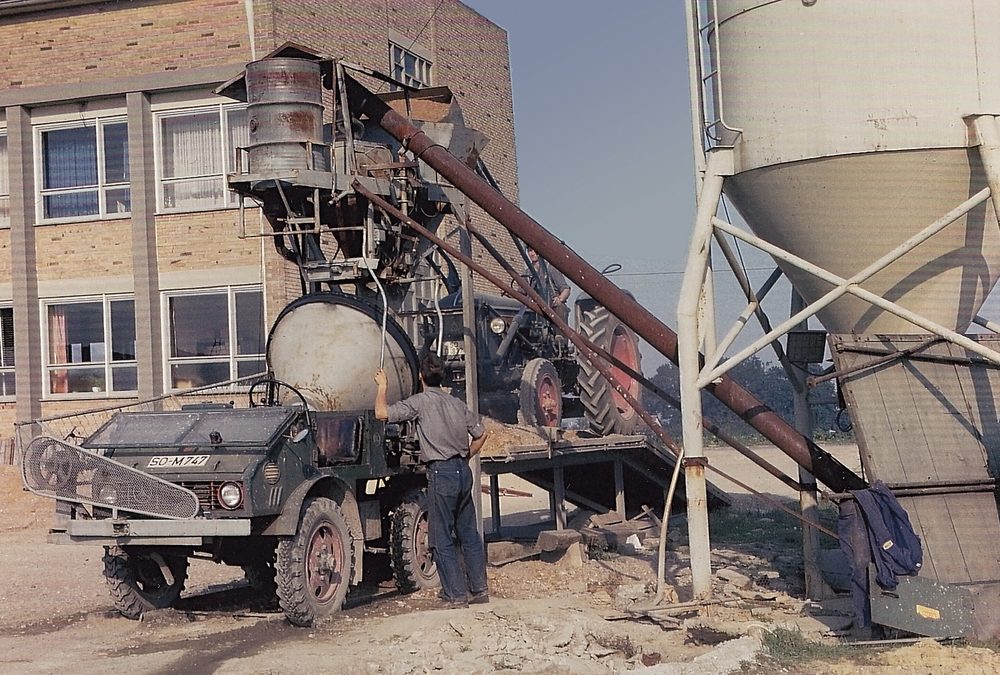
Two Unimogs converted into concrete mixers – the drums came from old buoys of the Möhne reservoir.ACCORD – Helmut Weiste - 1962An apprenticeship instead of a diploma
Helmut Weiste leaves grammar school with the intermediate certificate and starts training as a machine fitter.
- 1963Ireland
At seventeen he spends three weeks demonstrating machines across Ireland – after three days of storm on the Irish Sea. A first taste of difficult soils, and of customers who want to see everything for themselves.
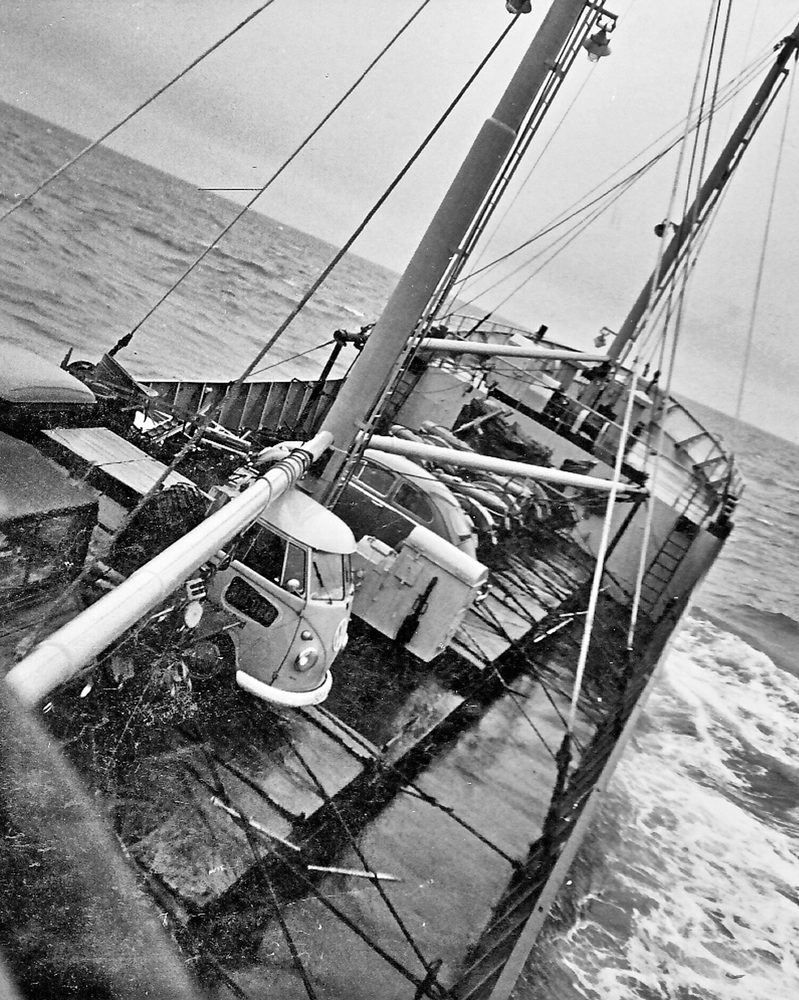
Storm on the Irish Sea, March 1963 – Helmut Weiste's first demonstration tour abroad.ACCORD – Helmut Weiste
The triangle
- 1963The accident
Detaching a reversible plough, the tractor rolls back and traps Helmut's right leg against the plough head. Alone in the yard, he frees himself by reaching the gear lever with his left arm. The question stays with him: why is hitching up so dangerous?
- February 1964The square tube in the U-section
Tidying the workshop, he notices a 40 mm square tube lying in a 60 mm U-section. “That is the solution for the connecting element!” On Saturday he builds an implement triangle and a tractor triangle; that afternoon he shows them to his father. On Monday, 24 February, to the engineers.
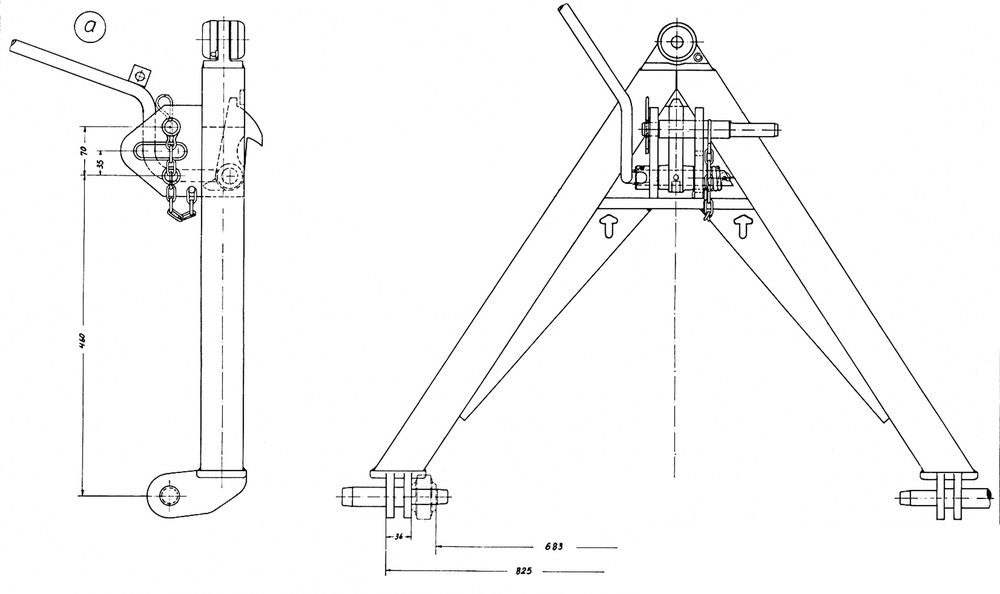
The principle: implement triangle from U-section, tractor triangle from square tube.ACCORD – Helmut Weiste - May 1964A world first at the DLG show
In Cologne the quick-hitch triangle becomes a sensation. A tractor with an electric drive demonstrates it indoors. Heinrich Weiste turns down licence offers – whereupon the competition develops quick hitches of its own.
- 3 March 1964Patent DE 1 215 419
Because Helmut is still a minor, the patent engineer at Hella advises filing in his father's name. His father has himself entered as co-inventor. Only in 1972 does he dissolve the agreement in writing: “Helmut Weiste is the sole inventor …”
- April 1965Studies in Cologne
On the advice of Dr Erich Schilling, Helmut Weiste begins an engineering degree; his three years of apprenticeship count as the required practical training.
- 1965Every implement gets a triangle
From now on ACCORD builds every implement with an integrated triangle. The farmer can couple combinations in line, side by side or one above the other. The triangle becomes the company logo.
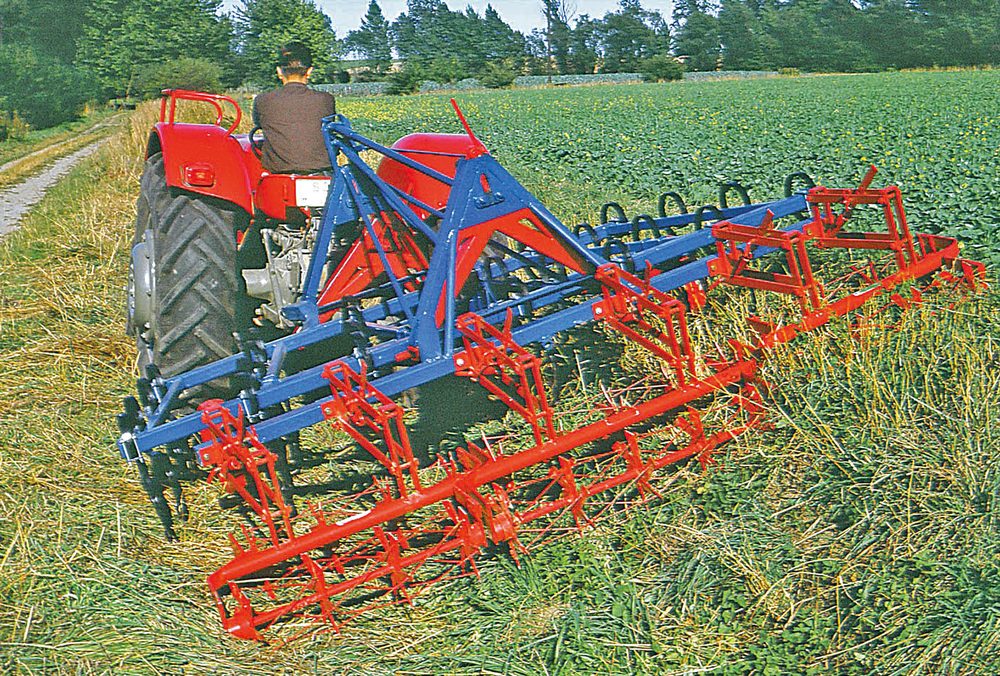
Cultivator with integrated implement triangle – from 1965 ACCORD built every implement this way.ACCORD – Helmut Weiste - 1972Intrac and MB-trac
The system tractors from Deutz and Mercedes-Benz are fitted with the ACCORD coupling as standard, front and rear. In the trade it has long been called the “Weiste triangle”.
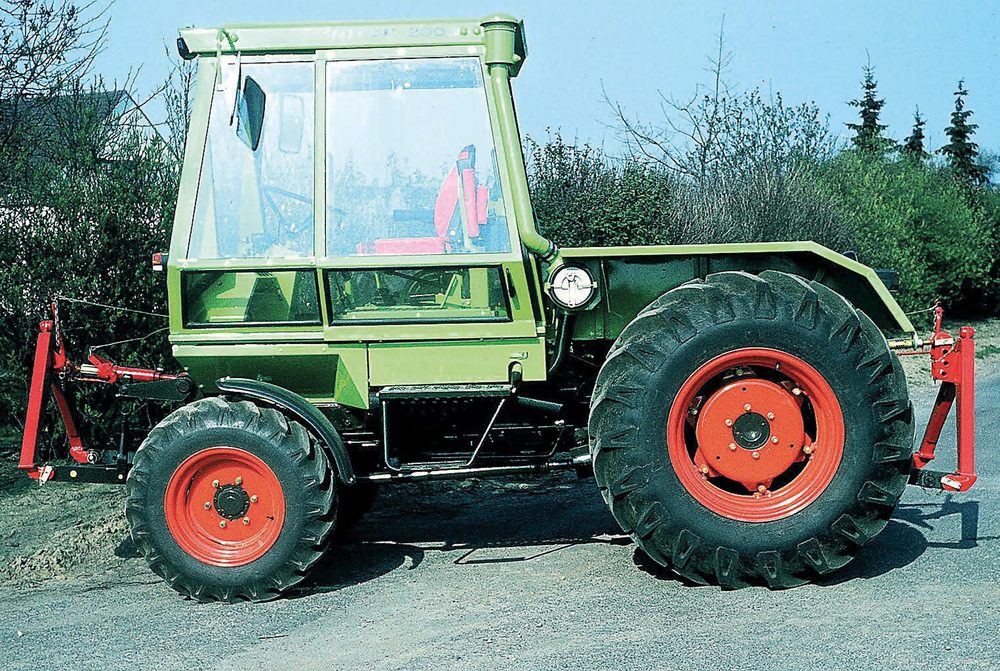
INTRAC 2002, fitted front and rear with the ACCORD triangle coupling as standard.ACCORD – Helmut Weiste - laterISO 11001-2
The dimensions of the ACCORD coupling are standardised internationally as the A-frame coupler. The German “standard hitch” DIN 9675, standardised prematurely in 1968, flops and is remembered as a cautionary tale.
Pneumatic distribution
- Winter 1964/65An unsatisfying trial
Heinrich Weiste wants a wider seed drill. A test rig distributes the seed by vibrating troughs – very unevenly. He asks his son for advice, who suggests blowing the grains through the channel with air instead.
- Summer 1965“The grains would have to be swirled!”
Cyclone and impact distributors deviate by 30 to 50 per cent. On a walk, Helmut Weiste watches the eddies around stones in a brook. The next day he flattens a delivery tube crosswise in a vice: ±10 to 15 per cent. Ernst Ullmann, a trained coppersmith, then hammers an even corrugation into a copper tube – ±5 to 8 per cent.
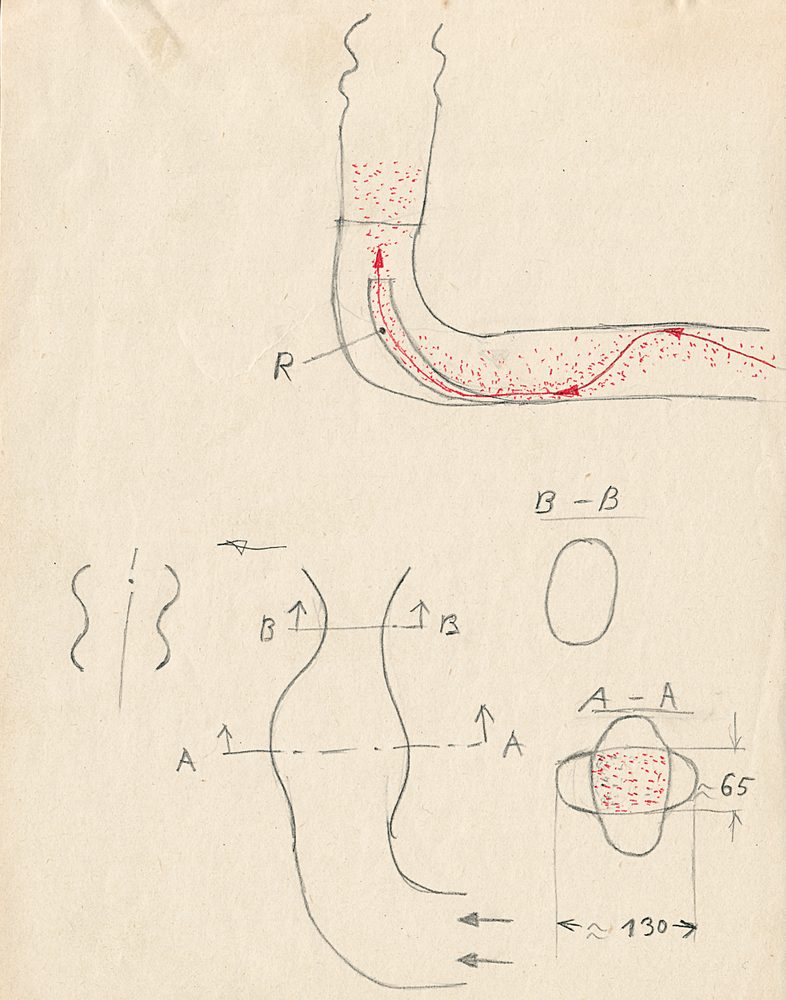
Hand sketch (1) from 1965: the corrugation in the delivery tube and the radial guide plate.ACCORD – Helmut Weiste - 1965Stroboscope and guide plates
A stroboscope lamp reveals that the grains travel in streaks along the outside of the bend. A radial guide plate in the elbow brings the deviation down to +4.4 / −2 per cent; longitudinal plates eliminate the swirl. At university he learns what he is dealing with: two-phase flow, then barely researched.
- 1966Three patent applications
His father files the pneumatic distribution as his own invention – Helmut is not even entered as a co-inventor. More serious still: a combination patent with many features offers little protection. Filed in 35 countries, it later becomes the open door for imitators.
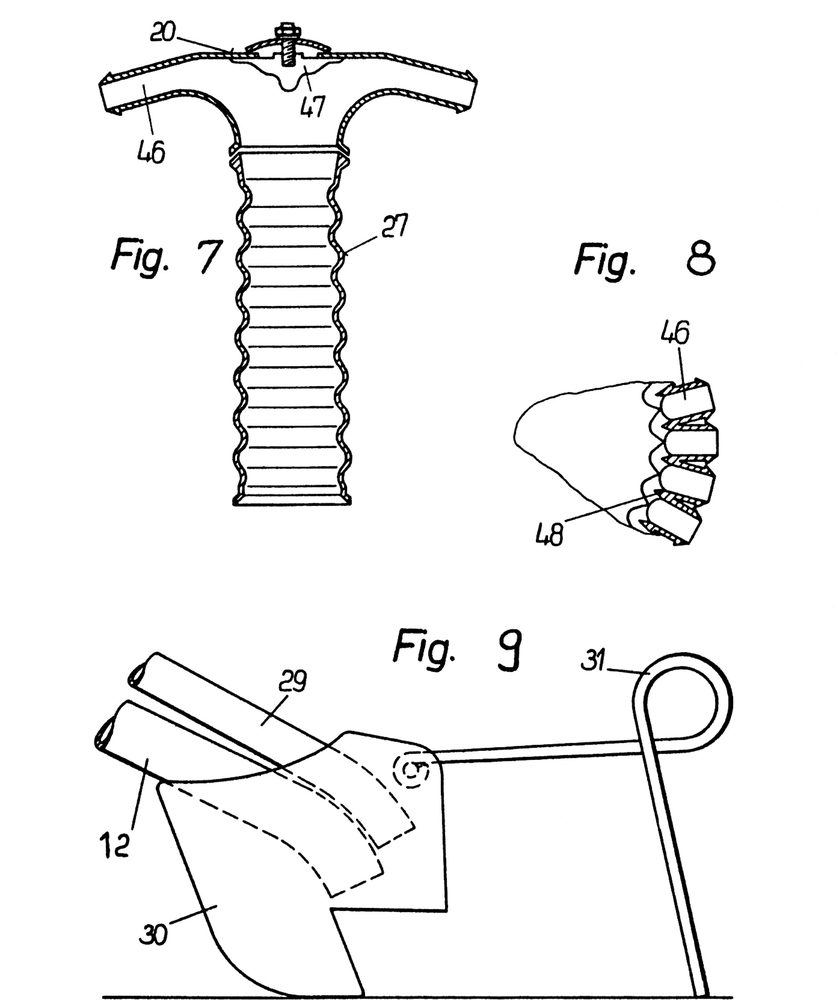
Figures 7 and 8: the corrugated-tube distributor – Helmut Weiste's invention of summer 1965.ACCORD – Helmut Weiste - May 1966Eight thousand kilometres to Moscow
Three vehicles, three men, five days to Red Square. At the international machinery show ACCORD receives the gold medal of the USSR Chamber of Commerce; at the reception Brezhnev suggests they come back. Then eight weeks of demonstrations across the Balkans – 7,500 kilometres, eight Eastern Bloc countries.
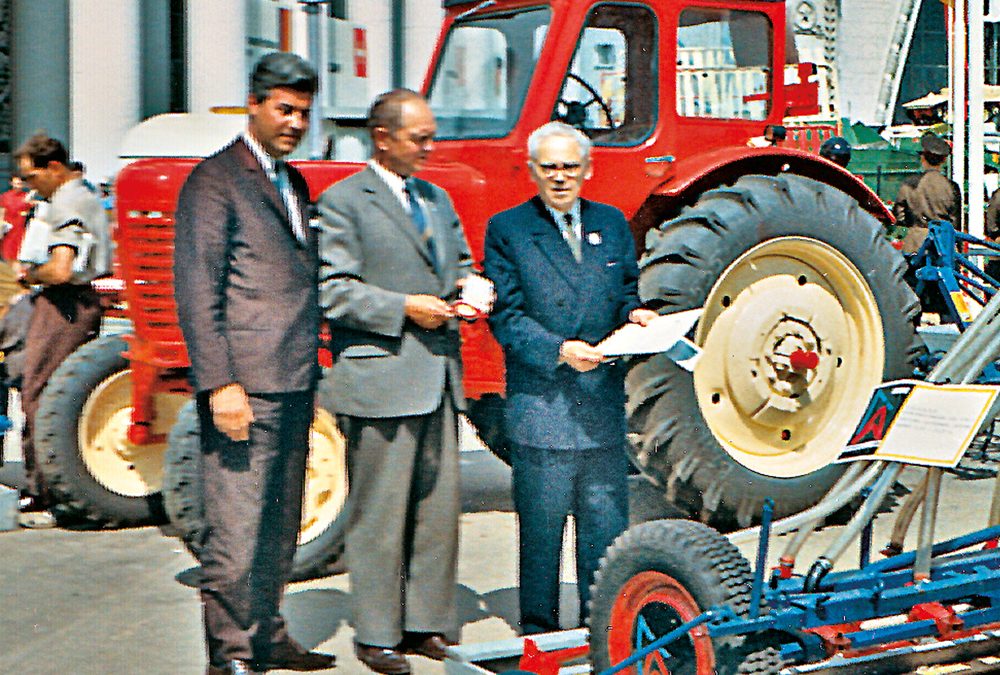
The President of the USSR Chamber of Commerce presents Heinrich Weiste with the gold medal.Norbert Kleine / ACCORD – Helmut Weiste - 4 October 1966The international field day
On ten hectares at Sieningsen, ACCORD shows eleven prototypes to 170 trade visitors from 17 countries: seed drills up to 15 metres wide, seeding cultivators for non-plough establishment, fertiliser spreaders. Brochures in eleven languages. Deutz, Massey Ferguson and IHC show interest – and all decline.
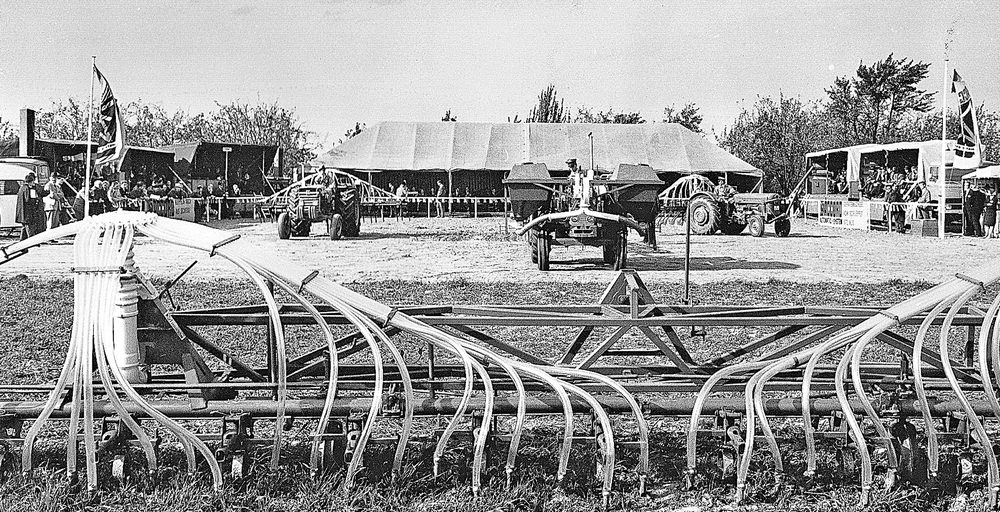
The international field day of 4 October 1966: demonstration ring with marquee and covered stands.ACCORD – Helmut Weiste - 1968First series – and first complaints
The 5 and 6 metre drills reach the market, together with 100 pneumatic fertiliser spreaders. The development time was too short. The reputation of the system is at stake. Helmut Weiste joins the company as an engineer on 1 March – he had meant to work elsewhere first.
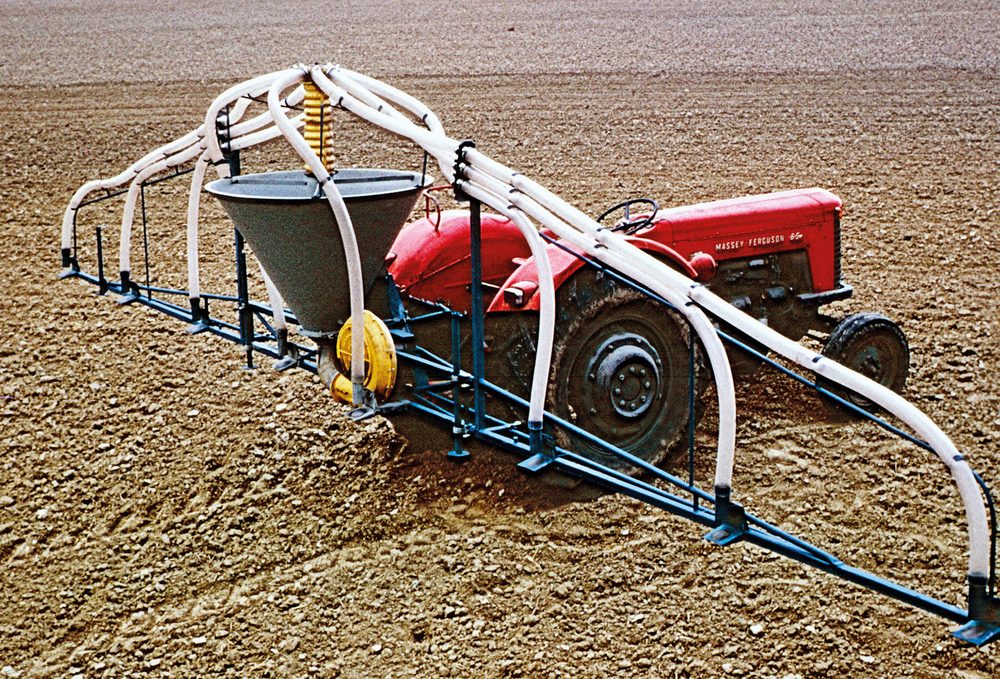
The 10 m PNEUMATIC fertiliser spreader, first series 1968.ACCORD – Helmut Weiste - 1968Tramlines from a champagne cork
To make matching passes easier, ACCORD recommends blocking one seed hose – a champagne cork in the distributor outlet will do. At first a bottle of sparkling wine comes with it. ACCORD is thus the first to introduce the tramline.
Crisis and new beginning
- 1969The cause is found
In Schleswig-Holstein the transverse distribution is visibly uneven. Helmut Weiste records flow profiles, compares distribution curves and discovers the swirl. Five causes are identified and removed; every machine is retrofitted before the autumn sowing.
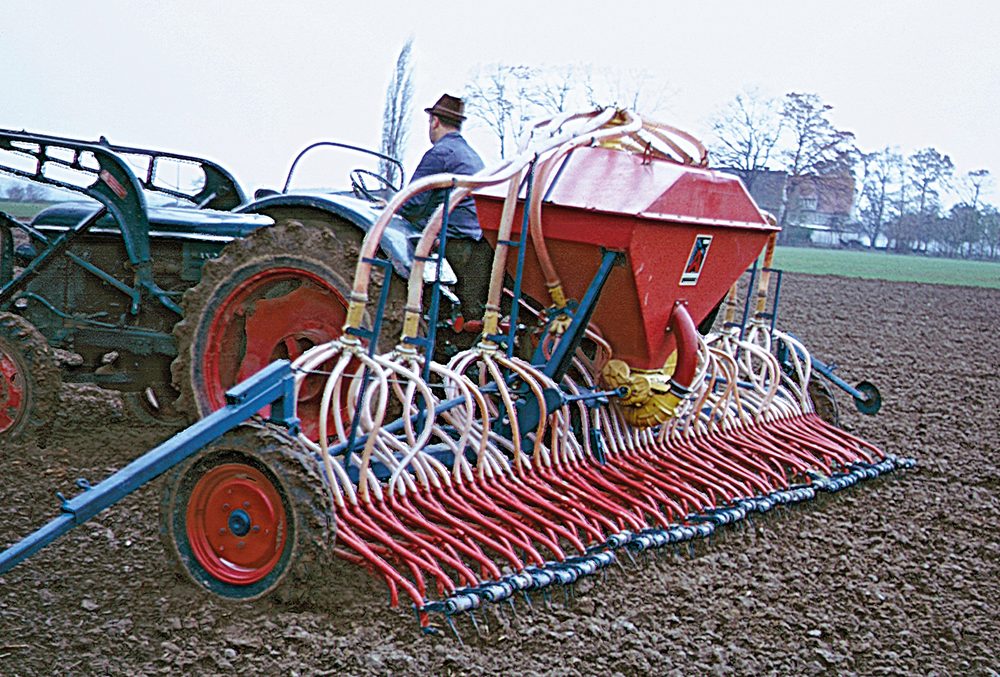
Seed drill with the modifications for improved distribution, 1969.ACCORD – Helmut Weiste - 1969–71A second degree
Against his father's will – who accuses him of betraying the family and the firm and refuses to pay – Helmut Weiste studies industrial engineering at Pforzheim, financed by state training grants.
- 1971The world's first air seeder
Mr Shea from Australia had turned up unannounced in Soest in 1970. In December 1971 Helmut Weiste flies to Melbourne to inspect what Connor Shea has built from ACCORD components: the Wideline Seeder. Cultivating, sowing and fertilising in one pass, ten metres wide, with 50 to 60 per cent less time and energy.
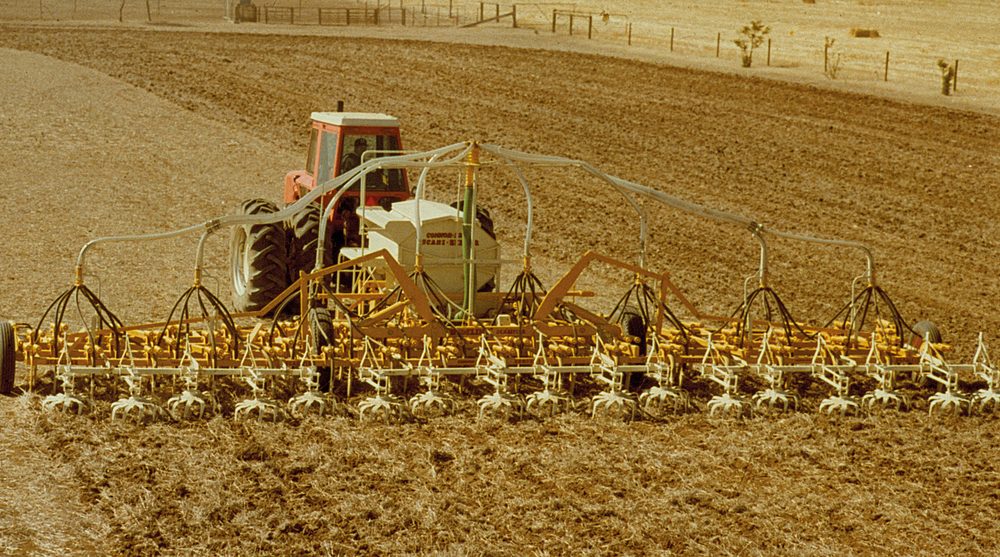
The Connor Shea Wideline Seeder, 1971 – the world's first air seeder.Connor Shea / ACCORD – Helmut Weiste - 1974Composition with creditors
After a bad debt of almost a million marks and a refused bridging loan, the company applies on 29 July for a composition procedure. The creditors agree on 3 October: 40 per cent, in six quarterly instalments of some 420,000 marks. Heinrich Weiste withdraws to Sieningsen.
- 1975Bärbel
On New Year's Day he proposes at St Peter-Ording; they marry on 15 August – he arrives ten minutes late at the registry office. On honeymoon he sketches the basic concept of a small, light seed drill on a drawing pad.
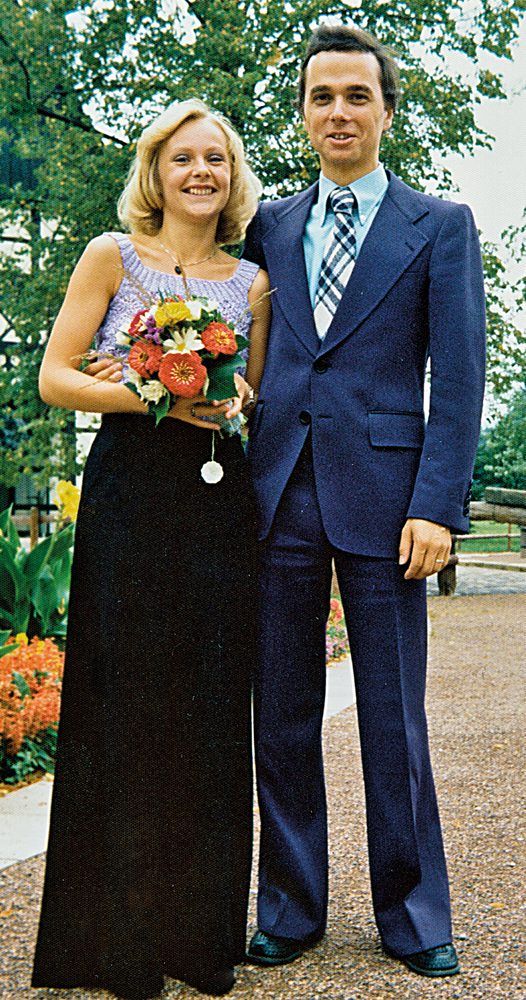
Helmut and Bärbel Weiste, 15 August 1975.ACCORD – Helmut Weiste - 1976The DL
January: the prototype is finished. March: first field use at his cousin's farm at Fahnen. July: the composition procedure is closed. By then his father's farm at Sieningsen has been sold – the bank had realised it.
March 1976: the first 3.33 m DL prototype at work on the Beuckmann farm at Fahnen.ACCORD – Helmut Weiste - 28 January 1977ACCORD Landmaschinen Heinrich Weiste & Co. GmbH
The brand moves into the company name. The first series of 200 DL drills sells out by the summer. Without it, Helmut Weiste later writes, “bankruptcy would have followed in 1978”.
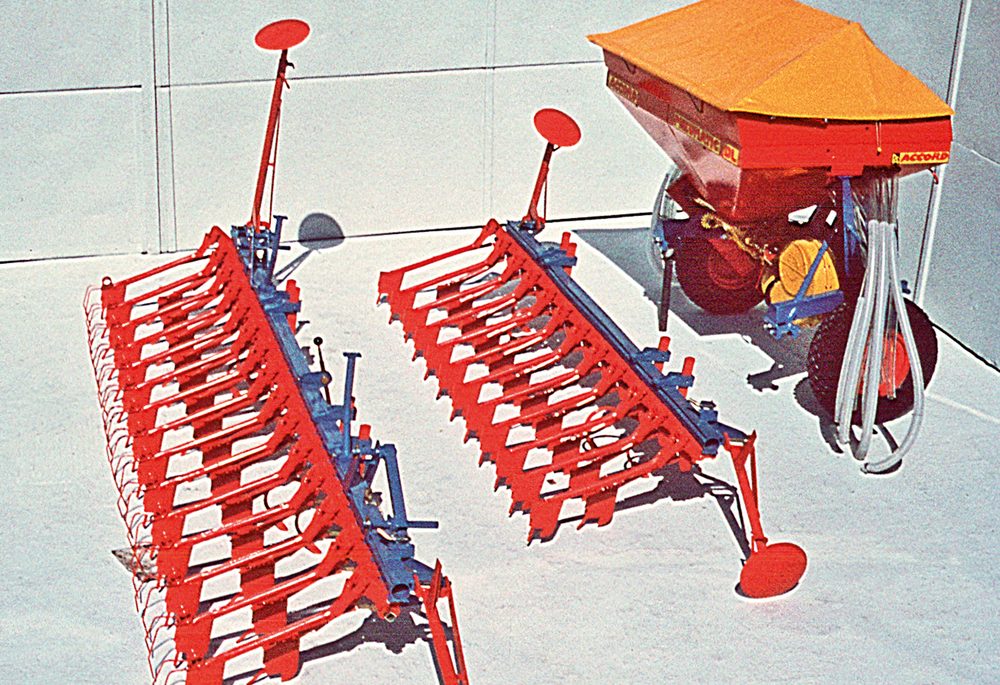
The DL seed drills in 3 m, 3.33 m and 4 m working widths.ACCORD – Helmut Weiste - 1977–79North America
Advising John Deere at Des Moines; helping Friggstad in Saskatchewan build its air seeder. In 1979 a 14.6-metre Friggstad air seeder with ACCORD parts covers 9.5 hectares in a single there-and-back run.
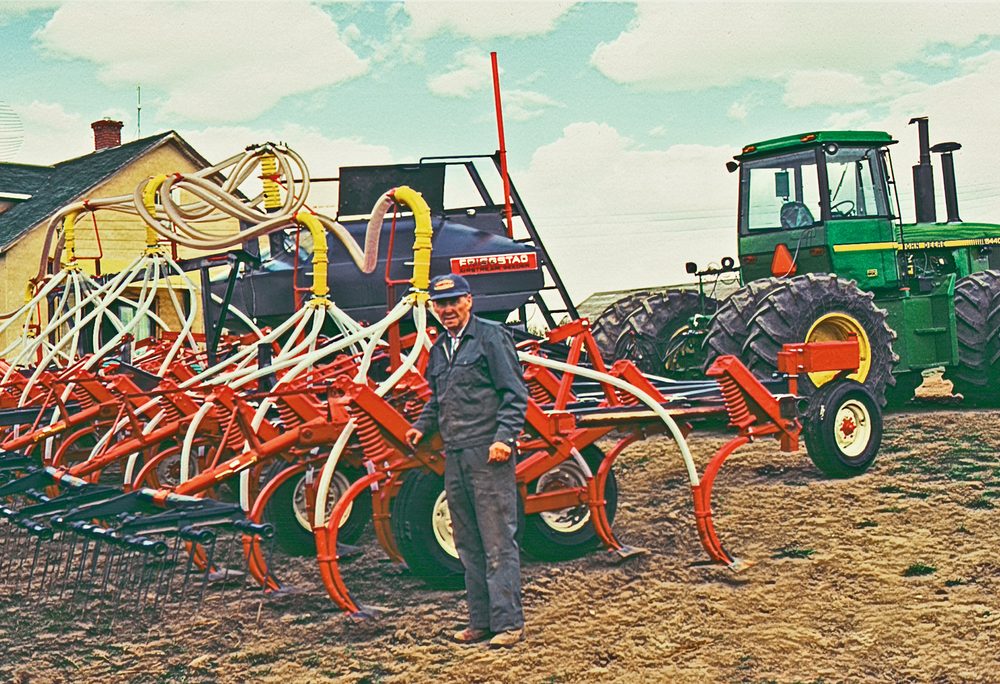
The 48-foot Friggstad air seeder with ACCORD PNEUMATIC components, May 1979.Friggstad / ACCORD – Helmut Weiste
The golden eighties
- 1981Sale and lease back
On the morning of the decisive meeting with the leasing company, Heinrich Weiste dies during the night. His son conducts the negotiation. On 31 December the contract is notarised: the works are sold for 5.1 million marks and leased back; debt service falls by 22 per cent.
- 1982The DA piggy-back drill
The seed hopper sits above the power harrow instead of behind it. Less overhang, no lifting frame, no wheels, no PTO shaft – and no dearer than a mechanical drill. Within four years the DA outsells the DL.
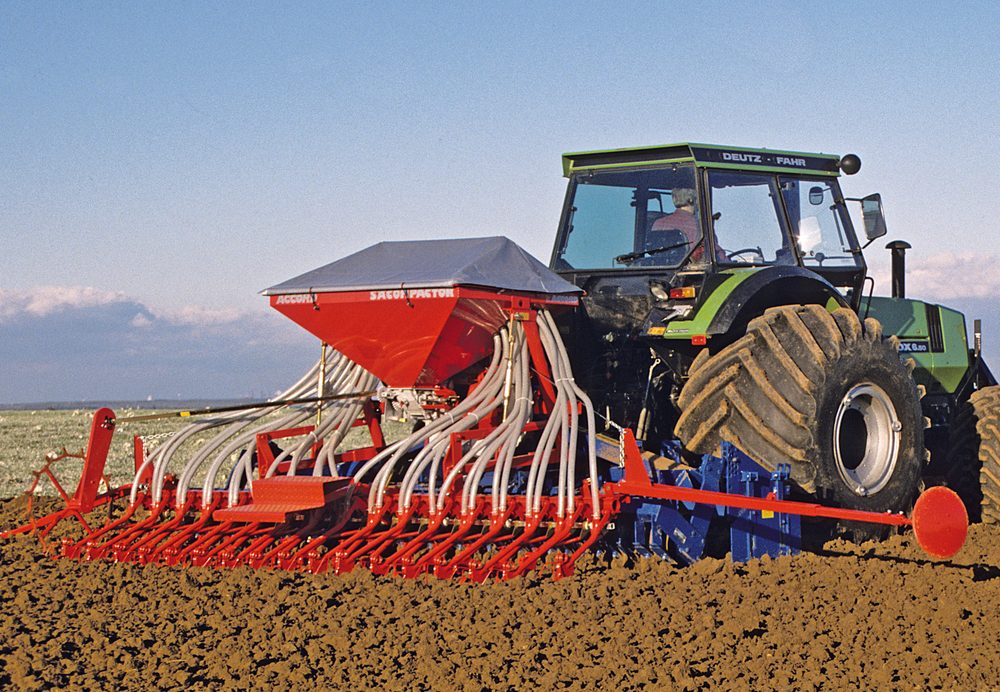
The DA piggy-back seed drill at work: the seed hopper sits above the power harrow.ACCORD – Helmut Weiste - 1983TURBO
A final distributor with five obliquely cut guide vanes uses the aerodynamic energy of the granule stream and spreads eight metres wide. ACCORD is the first to show an 18-metre fertiliser spreader.
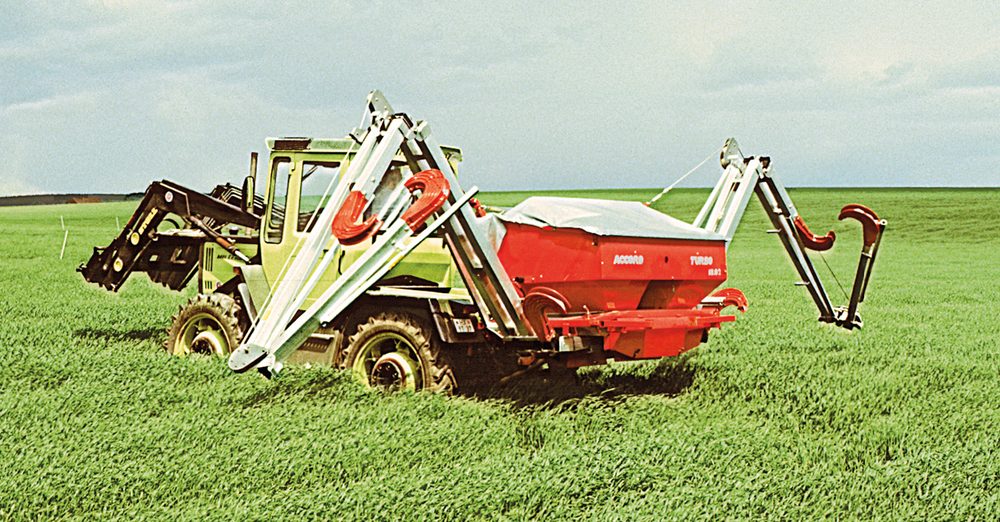
The TURBO fertiliser spreader: 18 m spreading width with only 15 m of booms.ACCORD – Helmut Weiste - 1984First order from Russia
Eighteen years after the Moscow fair: forty DT seed drills, each in its own wooden crate, collected by ten semi-trailers.
- February 1985Fire
Solvent residues in corrugated tubes ignite in the drying oven; the paint tank with 15,000 litres catches fire. The fire brigade has just moved into a new station a kilometre away. Even so, two thousand drills are assembled in 1985.
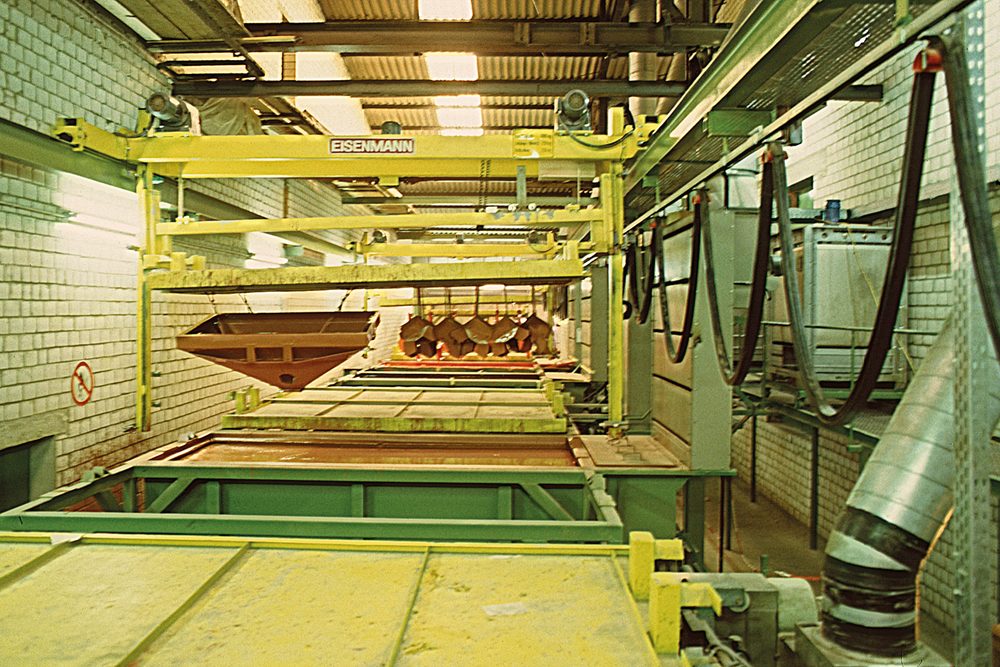
The dip-painting line of 1984 – it caught fire in February 1985.ACCORD – Helmut Weiste - 1985Into precision seeding
ACCORD acquires 51 per cent of Fähse in Düren – MONOPILL for beet, MINIAIR for fine seeds, MONOAIR for maize. The remaining shares follow at the end of 1989.
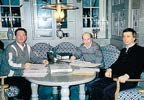
From left: Walter Born, Heinrich Gugenhan, Helmut Weiste – the takeover of Fähse.ACCORD – Helmut Weiste - August 1986Europe's most modern final assembly
Thirty metres of span, eighty metres long, and no conveyor line: the machines roll from station to station on small trolleys, carried by their integrated implement triangle. More than a thousand variants run in mixed sequence.
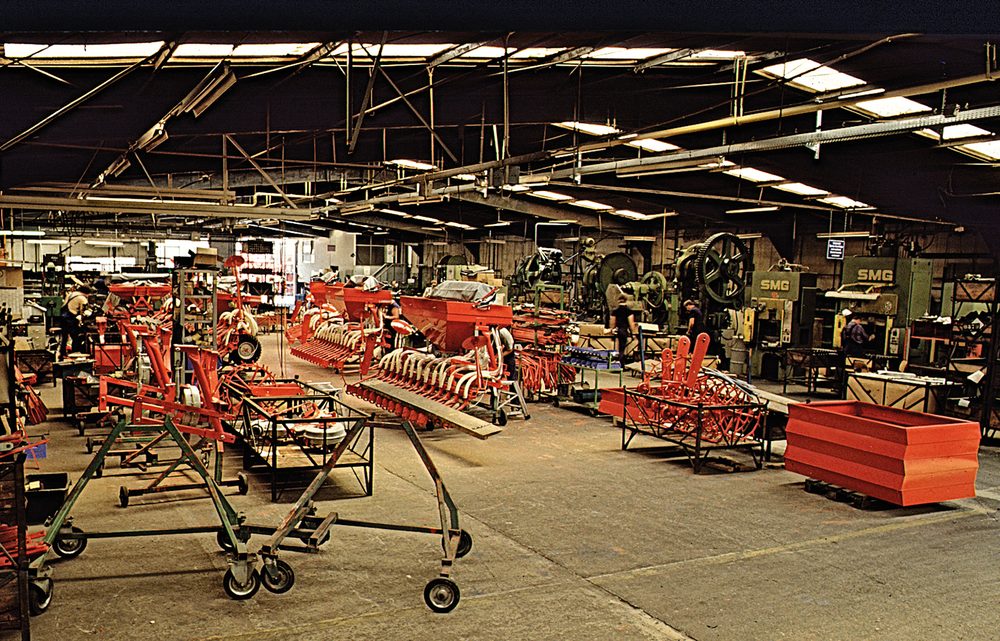
The new assembly hall of 1986: no conveyor line, but machines on small trolleys.ACCORD – Helmut Weiste - 1989Plastics in house
After Ernst Ullmann's death ACCORD takes over Lippetaler Kunststoff-Technik with eight employees – more than 400 different parts had come from there.
- 1980–1989From 10 to 50 million marks
Turnover quintuples. The German market share rises from 2.5 to 17 per cent, the British to 40 per cent. In 1989, 1,330 component kits go to other manufacturers – more than half of total sales.
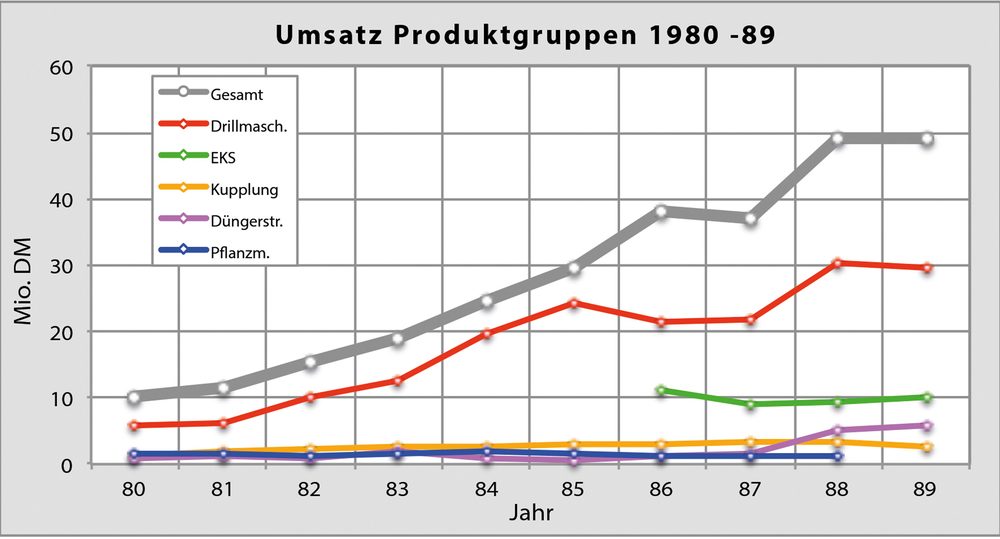
Turnover by product group 1980–1989: from 10 to 50 million DM.ACCORD – Helmut Weiste
Market leader
- June 1990Air Seeding '90 in Regina
At the international symposium of the University of Saskatchewan, Helmut Weiste presents the European development. At the field day thirteen manufacturers show their air seeders – all but one with PNEUMATIC distributors.
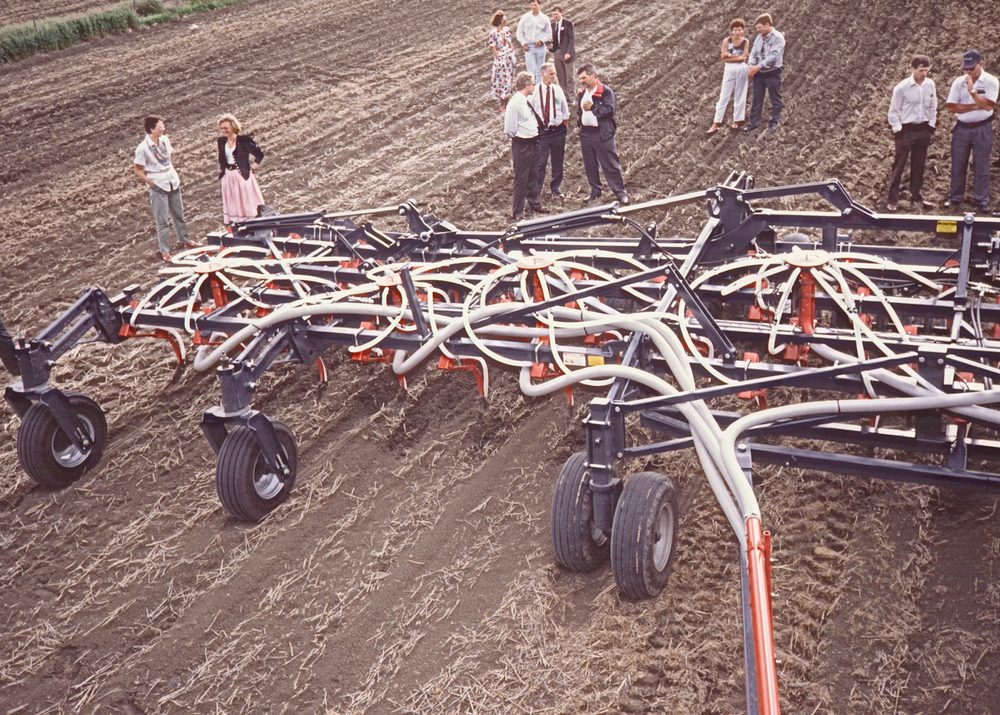
Air Seeding '90 in Regina: thirteen manufacturers demonstrated their air seeders in the field.ACCORD – Helmut Weiste - 1990Electronic seed drill control
Twenty tramline rhythms, continuous monitoring of the metering unit and fan, visual and audible warning – for the first time, complete electronic supervision during sowing.
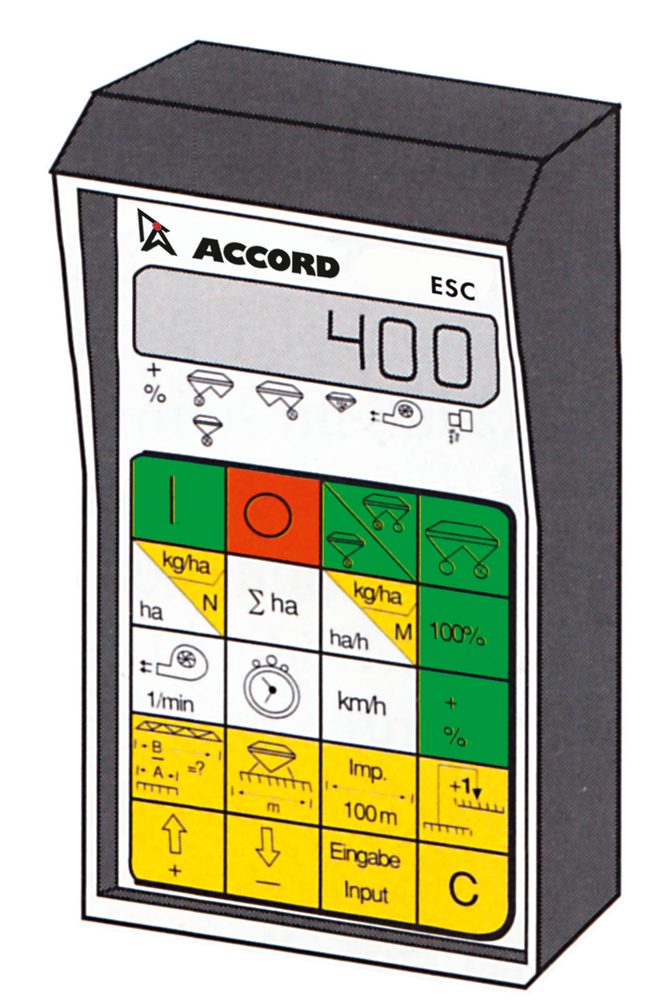
The ESC electronic seed drill control, 1990 – inform, monitor, control.ACCORD – Helmut Weiste - 1990/91East
In the former GDR a network of stocking dealers is built up; the training covers accounting and VAT as well as machinery. From 1992 Peter Penner, an agricultural engineer from Orenburg, opens up Ukraine and Russia – spending close to 200 days a year on the road.
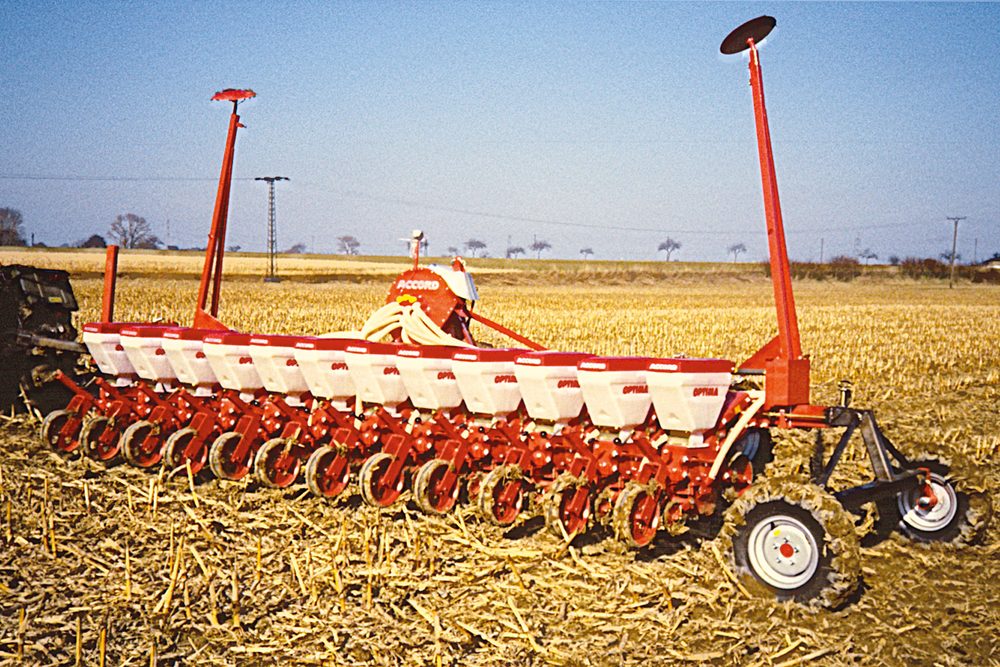
The OPTIMA-L: 6 m wide and light enough for the 80 hp tractors available in Ukraine.ACCORD – Helmut Weiste - 1993The CX coulter
In a rotating soil trough, the “roundabout”, clogging can be simulated at will. The answer: a convex steel disc and a flexible plastic disc on an offset axis that keep each other clean. Patent DE 42 24 152.
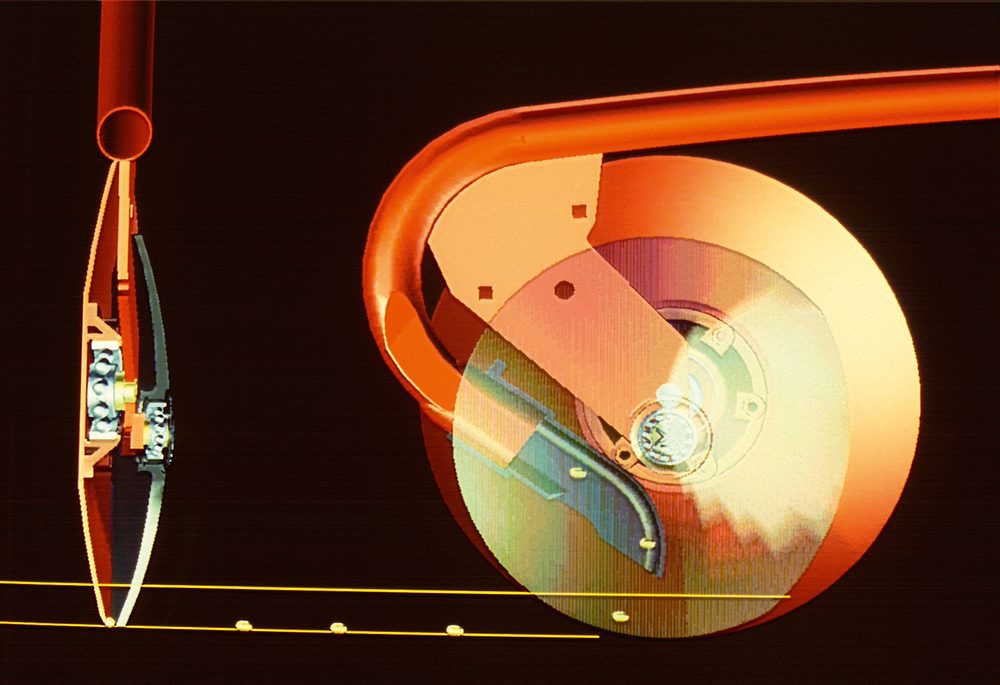
The CX coulter: a convex steel disc and a flexible plastic disc with offset axes.ACCORD – Helmut Weiste - 1994The survey
110 farmers in six countries, 16,086 hectares: 98 per cent satisfied, and in 96 per cent of cases the discs turned under all conditions. At Agritechnica 1995 the CX coulter is the talk of the show.
- 16 August 1994Kverneland
After John Deere declines to take a stake, a distribution and cooperation agreement is signed with the Norwegian Kverneland group. The staff learn of it only afterwards – stock market law required secrecy.
- 1995John Deere 750 A
In Europe the direct drill is fitted with the ACCORD PNEUMATIC seed tank. The longitudinal central tank allows folding to a three-metre transport width – impossible with mechanical seed boxes.
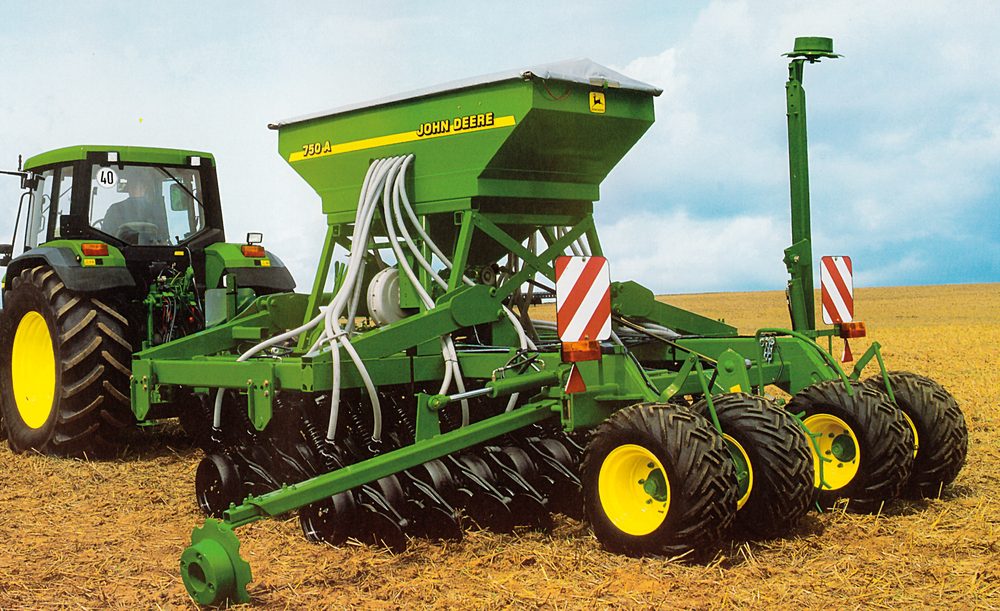
The John Deere 750 A No-Till with ACCORD PNEUMATIC seed tank, in Europe from 1995.John Deere / ACCORD – Helmut Weiste - May 1996Full takeover
Kverneland acquires ACCORD outright. Olaf Hørsdal flies the entire workforce to Stavanger on a charter plane. By the end of the year the new name hangs above the entrance.
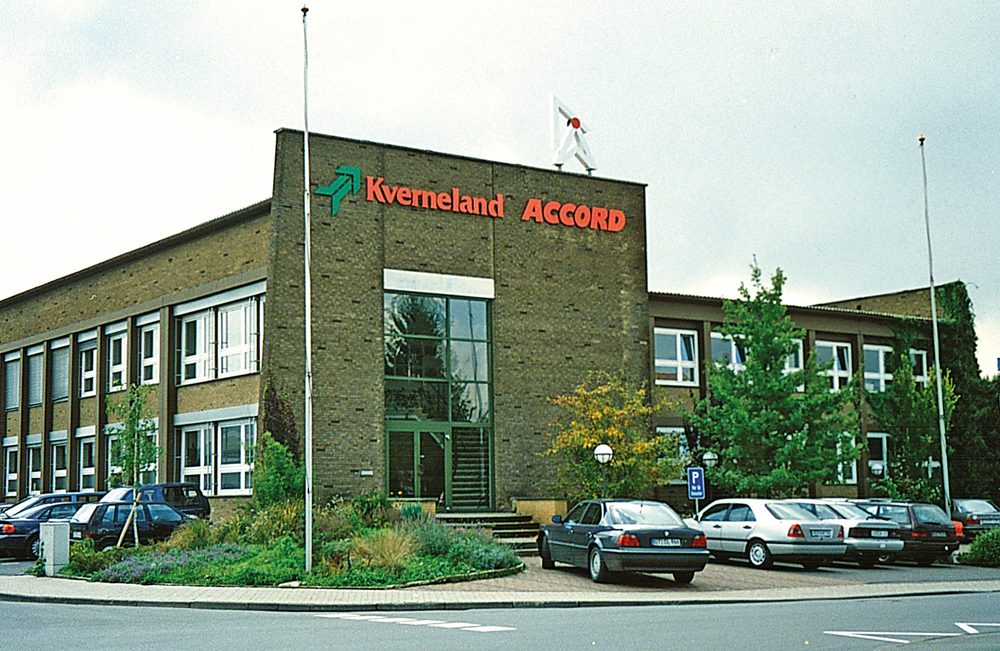
1996: the new company name above the entrance to the administration building.ACCORD – Helmut Weiste - 22 April 1998Wilmowsky medal in gold
The KTBL honours Helmut Weiste in the Imperial Hall of the Würzburg Residence – the third recipient from industry after Hermann Fendt and Anton Schlüter.
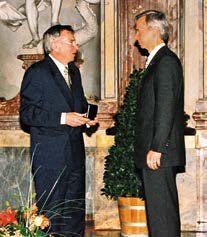
22 April 1998, Würzburg Residence: the Tilo Freiherr von Wilmowsky medal in gold.ACCORD – Helmut Weiste - 15 May 1998Fifty years of ACCORD
The celebration is held in Soest town hall and planned by the staff themselves. Arno Weiste, the son, presents the programme. Guest of honour: Marie Weiste, co-founder.
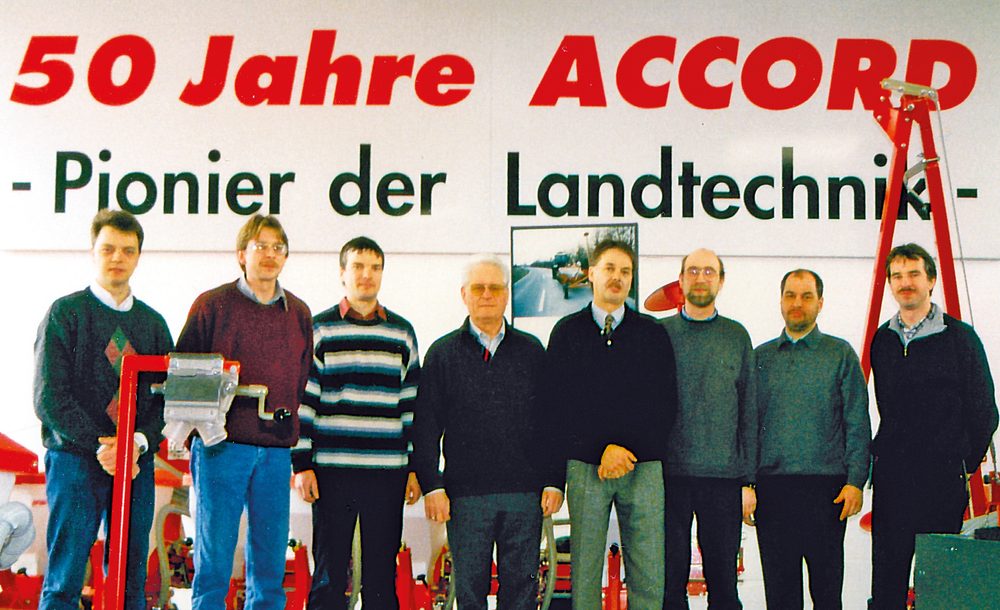
Fifty years of ACCORD – pioneer of agricultural engineering, Soest town hall, 15 May 1998.ACCORD – Helmut Weiste
Inside a group
- 1 June 1999A shock
An emergency operation. The doctors are 99 per cent certain it is cancer – the result is negative. “The chance of a benign growth in that place is two per cent,” the surgeon tells him.
- 31 December 1999Leaving
Helmut Weiste ends his employment as managing director and advises the group on seeding technology from then on. Dr Till Meinel succeeds him as head of research and development.
- 2000The patent battle ends
On 20 September 2000 the Technical Board of Appeal of the European Patent Office overturns the revocation of the CX patent. After six years of proceedings the protection stands. ACCORD does not forbid its competitor to use it, but grants a licence.
- 2001Dencker pin of honour
The Institute of Agricultural Engineering at the University of Bonn recognises Helmut Weiste's contribution to drilling and precision seeding and his cooperation with teaching and research.
- 2002Tine Seeder
George Randles sees a prototype in Soest and says: exactly the right machine for the rough soils of England. The first series sells out completely; before long the TS overtakes the old DL.
- 2005The end of piecework
Until then a sacred cow at ACCORD: individual and group piecework are abolished. Smaller, more flexible batches have made the system obsolete.
- 2009The DG-12000
A Rostock engineering office simulates the folding kinematics on the computer. Twelve metres of working width, 6,000 litres, unfolding in under two minutes, up to 140 hectares a day. “It reminded me of the way large birds fold their wings.”
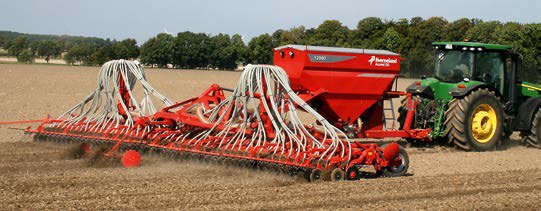
The DG-12000: 12 m working width, a 6,000-litre tank, up to 140 hectares a day.Kverneland Group / ACCORD – Helmut Weiste - 2012Cathodic dip painting
The largest expansion project in the company's history – more than ten million euros in two years. The acrylate line protects the parts against corrosion as well as a premium car.
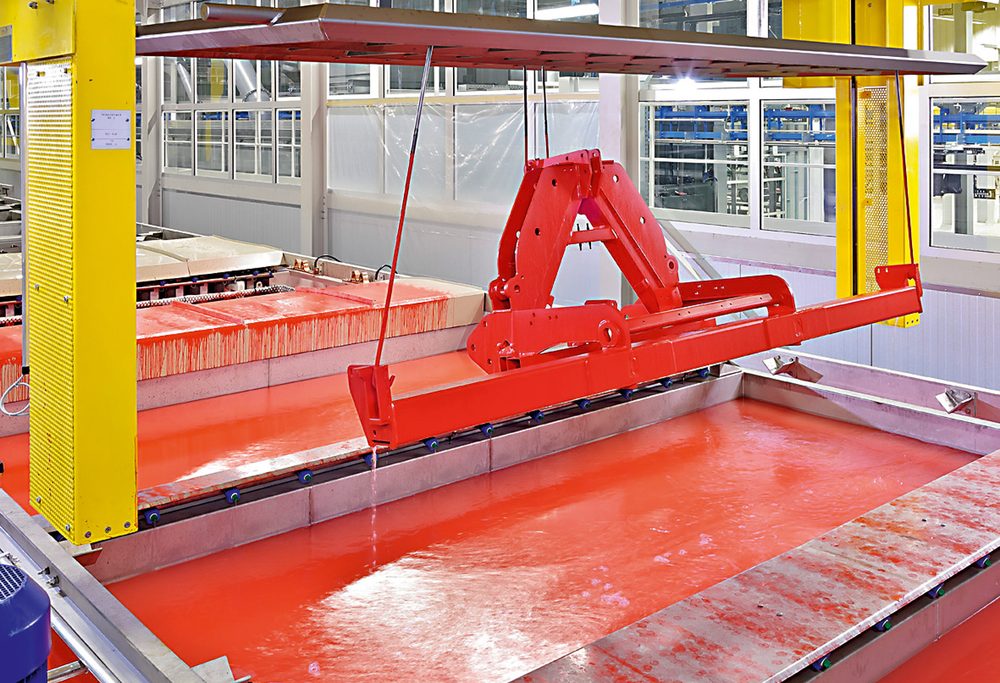
The 2012 cathodic dip-painting line: automotive-grade corrosion protection.Kverneland Group / ACCORD – Helmut Weiste - 2012Worldwide
Almost 100 per cent of Australia's grain area is sown pneumatically, 85 per cent of Canada's and 70 per cent of America's. Of eleven North American air seeder makers, ten use the ACCORD distributor principle.
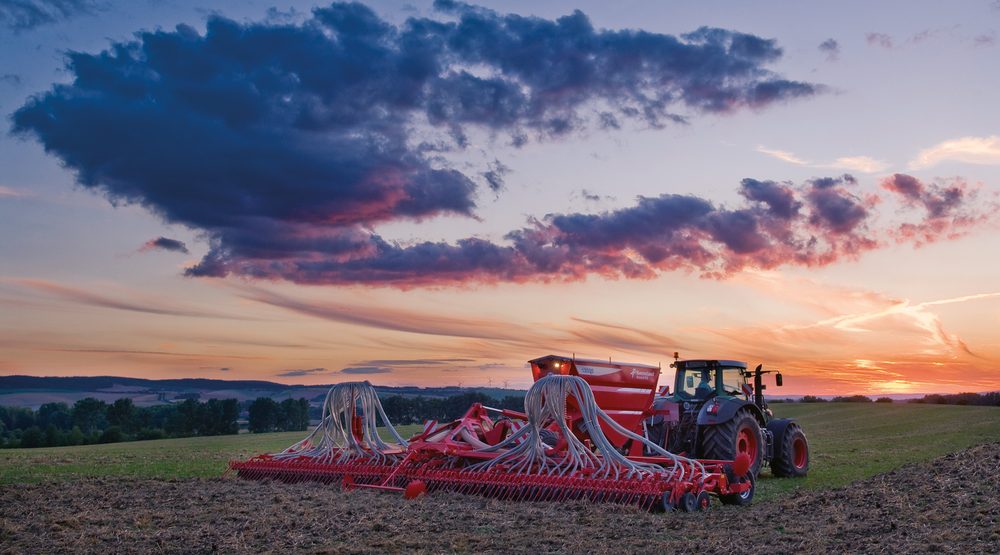
“The visions we had back then are reality today.”Kverneland Group / ACCORD – Helmut Weiste